
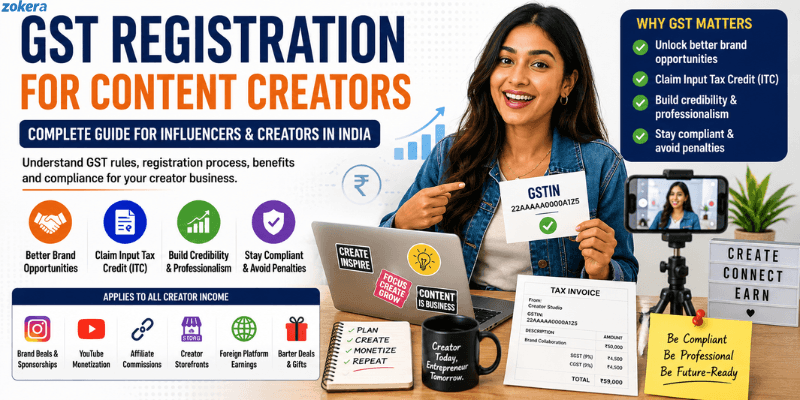
You are creating content regularly, brands are paying you for collaborations, affiliate commissions are coming in, and then someone asks: “Do you have a GSTIN?” Blank. Most Indian creators hit this wall without warning. GST registration sounds like a big-business thing, but the rules apply to creators too, and missing them can create penalties, delayed payments, and compliance headaches.
Whether you are earning from Instagram brand deals, YouTube monetization, affiliate commissions, or a creator storefront, understanding GST is becoming essential in India’s creator economy. This guide explains when content creators need GST registration, how GST applies to different income streams, and how to register step by step.
What Is GST and Why Does It Apply to Content Creators?
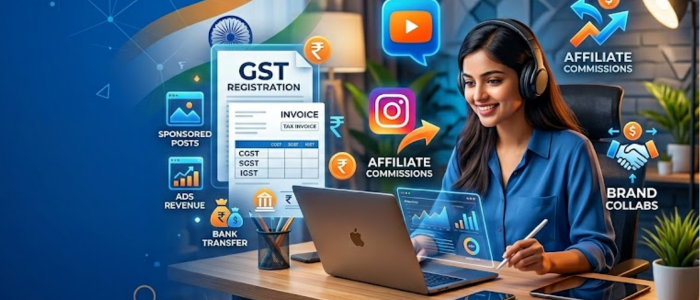
GST (Goods and Services Tax) is a unified indirect tax system in India that applies to the supply of goods and services. According to the Central Board of Indirect Taxes and Customs (CBIC), GST applies to taxable supplies of services across India. When you create sponsored content, promote products, earn affiliate commissions, or monetize your audience online, you are considered a service provider under GST law.
Content creator and influencer services are generally classified under advertising, marketing, or digital media-related SAC categories depending on the nature of the work performed. Once your taxable service income crosses the prescribed threshold, GST registration may become mandatory.
This includes income from:
- Brand collaborations
- Sponsored posts
- Affiliate commissions
- YouTube monetization
- Instagram promotions
- Creator storefront earnings
- Paid consulting or digital services
ALSO READ: 5 Reasons Why Every Indian Creator Needs a Digital Storefront
When Does a Content Creator Need GST Registration in India?
GST registration for influencers and content creators depends on multiple conditions. Even one trigger may create registration requirements.
The Turnover Threshold Rule
If your total annual service income exceeds ₹20 lakh in a financial year, GST registration becomes mandatory in most Indian states.
For special category states, the threshold is generally ₹10 lakh.
This turnover includes all creator-related income combined, such as:
- Brand deals
- Affiliate income
- Storefront commissions
- Sponsored content payments
- Freelance creative services
- Ad revenue
GST Registration Threshold Summary
| Situation | GST Registration Required? |
|---|---|
| Income below ₹20 lakh with limited local operations | Usually No |
| Income above ₹20 lakh | Yes |
| Brand collaborations and sponsorships | Taxable service |
| AdSense and foreign platform income | Counts toward turnover |
| Barter collaborations | Taxable value may apply |
Situations Where Threshold Alone May Not Be Enough
Certain creator activities can create GST obligations even at lower income levels.
These may include:
- Regular interstate business transactions
- Selling digital products or online courses
- Working through specific e-commerce/platform structures
- Export of services to foreign clients
- Claiming Input Tax Credit (ITC)
Creators frequently working with brands across multiple states or receiving international payments should consult a qualified CA once their creator income starts growing.
GST on Different Types of Creator Income
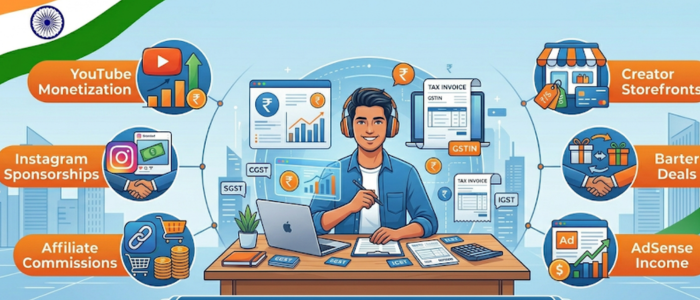
Different creator income streams are treated differently under GST law.
Brand Collaborations and Sponsorships
When a brand pays you for an Instagram reel, YouTube integration, sponsored story, or promotional campaign, you are supplying a taxable service.
If you are GST-registered:
- You raise a GST invoice
- You charge 18% GST on your fee
- You deposit that GST with the government
Many large brands prefer working with GST-registered creators because they can claim Input Tax Credit (ITC) on those invoices.
Affiliate and Platform Income (Zokera Storefront)
Creators using a Zokera storefront earn commission whenever followers purchase through their storefront links. Followers also receive cashback, making it beneficial for both creators and shoppers. Zokera partners with 1000+ brands, which gives creators multiple earning opportunities.
This commission income is treated as service income under GST and counts toward your total turnover.
If you are GST-registered, platform deductions like TDS may also need reconciliation while filing returns. Creators can also refer to the official Income Tax Department portal for tax-related compliance and filing information.
ALSO READ: How to Set Up Your Zokera Creator Storefront in Minutes
Barter Deals and Gifted Products
Receiving products in exchange for content is not automatically considered “free” under GST.
If a brand gives you:
- Smartphones
- Skincare products
- Travel stays
- Clothing
- Gadgets
In exchange for promotional content, the value of those products may be treated as consideration for your services.
Large barter collaborations can contribute to your GST turnover calculation.
AdSense and Foreign Platform Earnings
Income from Google AdSense, YouTube monetization, Meta monetization, or foreign brand collaborations is generally treated as export of services under GST law if the applicable export conditions are satisfied.
Export of services is considered a zero-rated supply, which means GST may not be charged on the invoice itself. However, this income still counts toward your turnover for GST registration purposes.
This is one of the most important GST rules for YouTubers and creators earning international revenue.
What Is Reverse Charge Mechanism (RCM)?
The Reverse Charge Mechanism (RCM) applies when you purchase services from foreign companies.
Examples include:
- Google Workspace
- Adobe subscriptions
- Canva Pro
- International SaaS tools
- Cloud hosting platforms
- Meta advertising services
Under RCM, the GST liability shifts to you as the recipient of the service instead of the foreign company.
Because GST treatment for export services and foreign platform payments can vary depending on the transaction structure, creators earning significant overseas income should consult a qualified CA.
ALSO READ: How to Get Brand Collaborations as a Small Creator in 2026
Step-by-Step GST Registration Process for Content Creators
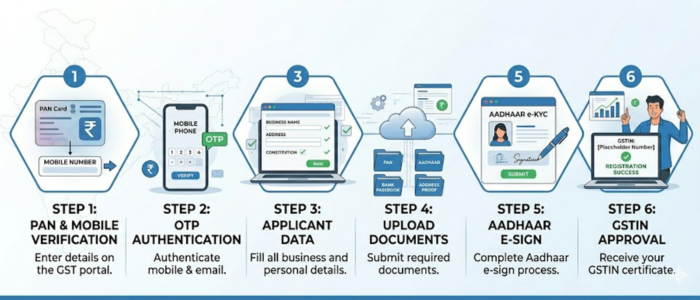
GST registration is completed online through the official GST portal.
Step 1: Visit the GST Portal
Go to: Official GST Portal
Click on New Registration under the Services section.
Step 2: Fill Basic Details
Select:
- Taxpayer
- Your state and district
- Legal name (as per PAN)
- PAN number
- Email address
- Mobile number
Step 3: OTP Verification
You will receive OTPs on both your mobile number and email address.
After verification, you receive a Temporary Reference Number (TRN).
Step 4: Complete Part B of Registration
Log in using the TRN and fill in:
- Business details
- Nature of business
- Bank account information
- Address proof
- Required documents
Choose: Service Provider as the business category.
Step 5: Submit Application
Submit the form using:
- Aadhaar e-sign
- Digital Signature Certificate (DSC)
For most individual creators, Aadhaar e-sign is the easiest option.
Step 6: Receive GSTIN
After verification, your GSTIN is usually issued within 7 working days if the documents are correct.
You can also verify GST numbers through the official GST Taxpayer Search tool.
ALSO READ: How to Earn Passive Income as a Content Creator (2026 Guide)
Documents Required for GST Registration
Keep these documents ready before applying:
- PAN card
- Aadhaar card
- Passport-size photograph
- Bank statement or cancelled cheque
- Address proof of business place
- Rent agreement or ownership proof (home address also works for creators working from home)
A Digital Signature Certificate (DSC) is optional for individuals.
Benefits of Voluntary GST Registration for Creators
Even if your income is below ₹20 lakh, voluntary GST registration can still be beneficial.
1. Better Brand Opportunities
Large agencies and companies often prefer working with GST-registered creators because they can claim Input Tax Credit.
Without GST registration, some creator campaigns may not be accessible to you.
2. Claim Input Tax Credit (ITC)
You can claim GST paid on:
- Cameras
- Laptops
- Editing software
- Studio equipment
- Internet bills
- Workspace rent
This can significantly reduce your effective tax burden.
3. Professional Credibility
Having a GSTIN makes you look more professional and business-ready while negotiating with brands and agencies.
4. Future Compliance Becomes Easier
If your creator income grows rapidly later, you are already compliant and do not need to rush through delayed registration and filings.
Conclusion
As the creator economy grows in India, GST compliance is becoming increasingly important for influencers, YouTubers, affiliate marketers, and digital creators. Whether you earn through brand collaborations, AdSense, affiliate marketing, or storefront commissions, understanding GST early helps you avoid future compliance problems and build a more professional creator business.
GST laws and compliance rules may change over time. Creators handling significant income, interstate transactions, export services, or platform-based earnings should consult a qualified CA or tax professional for advice specific to their business.
ALSO READ:
- How to Become a UGC Creator: The Complete Beginner Guide for India 2026
- The Complete Beginner's Guide to Earning on Zokera
- What Is Creator Commerce and Why Is It the Future?
- How Zokera's Auto-DM Tech Increases Your Conversion Rate
- How YouTube Creators Can Earn More with Zokera (Beyond Just Ad Revenue)
- How to Use Zokera to Scale Your Creator Business in 2026
- From Zero to Creator: How to Start Monetizing Today
FAQs: GST Registration for Content Creators India
Q1. Do content creators need to pay GST?
Yes. If your annual service income crosses ₹20 lakh (₹10 lakh in special category states), GST registration may become mandatory. Certain business structures and interstate or international transactions may also create GST obligations.
Q2. What is the GST rate on influencer services?
Influencer marketing and content creation services generally attract 18% GST in India.
Q3. Is GST applicable to barter deals for creators?
Yes. If a brand gives products or services in exchange for promotional content, the value of those items may be treated as consideration under GST.
Q4. Does AdSense income count toward the GST threshold?
Yes. AdSense and foreign platform earnings generally count toward your turnover calculation for GST registration purposes.
Q5. What is RCM for creators?
Reverse Charge Mechanism (RCM) applies when creators purchase services from foreign companies like Canva, Adobe, Google Workspace, or cloud software providers.
Q6. Can creators using platforms like Zokera register for GST?
Absolutely. Creators earning affiliate commissions, storefront income, or collaboration revenue through platforms can register for GST once they meet the eligibility criteria.
Q7. What happens if a creator does not register despite being liable?
Non-registration may lead to penalties, interest liabilities, and compliance issues with brands and agencies.
Q8. Is GST registration free in India?
Yes. GST registration on the official GST portal is completely free.
Comments (0)
Be the first to comment.