
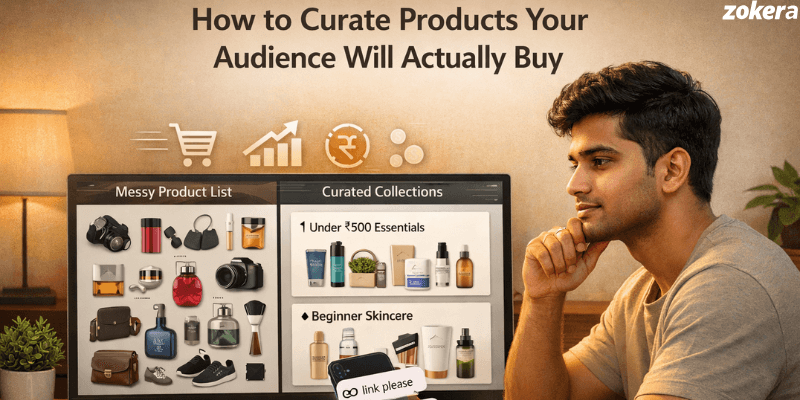
Most creators make the same mistake. They add products they personally like without thinking about what their audience actually wants to buy. The result is always the same. Followers scroll, click, and leave without purchasing anything.
If you are wondering how to curate products for your audience, the answer starts with understanding what they actually want to buy.
If you want your Zokera storefront to do more than just look good, product curation is a skill you need to build. It is not about adding as many products as possible. It is about adding the right products for the right people at the right time. This blog breaks down exactly how to do that, step by step.
Why Most Creators Get Product Curation Wrong
Product curation sounds simple, but most creators approach it the wrong way. They fill their storefront with trending products, whatever their latest brand deal is, or products they personally love. Nobody stops to ask what the audience actually needs, can afford, or wants to buy right now.
Here is where things go wrong:
Recommending premium products to a budget-conscious audience
Adding too many products with no clear theme or direction
Promoting products without any personal experience or honest opinion
Never updating the storefront after the initial setup
If a skincare creator who always shares affordable routines suddenly recommends a Rs. 4,000 serum, the audience feels disconnected. Trust breaks and conversions drop. Product curation means the right product, for the right audience, at the right time.
How to Curate Products for Your Audience
Learning how to curate products for your audience is not about guessing. It is about using real data, trust, and smart organization to improve conversions.
1. Understand Your Audience Before You Pick Any Product

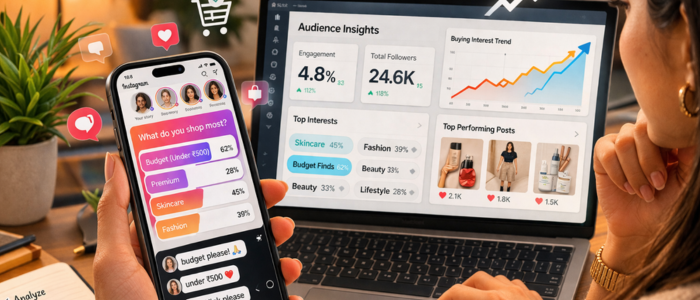
Before you add a single product to your storefront, you need to understand how your audience shops. This is the most important step, and most creators skip it completely.
Start by looking at the data you already have:
Check your comments and DMs. Where are the "send link" requests coming from the most?
Run Instagram polls. Ask if your followers prefer budget finds or premium quality products.
Look at your past posts. Which product-related content got the highest saves, shares, and engagement?
Notice the price range your audience always responds to. Budget under Rs. 500? Or are they comfortable spending more?
This is the most important step if you want to truly understand how to curate products for your audience.
When your audience is already asking for links in your comments, that is the clearest sign of buying intent. Your job is simply to make it easy for them to buy. Every product you curate should be based on this data, not on your personal preference alone.
2. Only Recommend Products You Have Personally Tested
Authenticity is your biggest selling power as a creator. When you share real results, real experience, and honest feedback about a product, your audience trusts you. And trust is what drives purchases.
Think about it this way. One fake or paid recommendation might bring one sale. But one genuine recommendation based on real experience builds repeat buyers who come back every time you post something new.
Here is what genuine curation looks like:
You have used the product for at least a few days or weeks
You can talk about what you liked and what you did not
You would recommend it to a close friend without being paid to do so
It fits the lifestyle and budget of your specific audience
Zokera gives you access to 1000+ brand partnerships. Instead of adding everything available, pick the brands and products you have personally used or genuinely believe in. That kind of honest curation is what converts followers into buyers.
3. Organize Your Products Into Themed Collections
One of the biggest curation mistakes creators make is using generic labels like "Skincare" or "Electronics" to organize their storefront. These labels do not inspire anyone to buy. They just look like a catalog.
The better approach is to organize your storefront around real moments and real needs your audience has. Think about what your followers are going through in their daily lives and curate collections around that.
Some collection ideas that work well:
My Daily Essentials Under Rs. 500
Best Diwali Gifts Under Rs. 1000
Beginner Friendly Skincare Routine
Work From Home Setup I Actually Use
Budget Fashion Finds of the Month
Everything You Need for a College Hostel
Zokera lets you group products into named collections so followers can browse and shop multiple products at once. This makes the experience easier for them and increases your chances of earning more from a single visit to your storefront.
4. Keep Your Storefront Clean and Focused
More products do not mean more sales. In fact, too many choices confuse people, and they end up buying nothing at all. This is called decision fatigue, and it is a real reason why storefronts fail to convert.
A focused storefront with 10 to 15 carefully chosen products will always perform better than a storefront with 100 random products thrown together. Quality always beats quantity when it comes to curation.
Follow these simple rules to keep your storefront clean:
Keep your most recently featured products at the top
Remove products that are out of stock or no longer relevant
Do not add products just to fill space
Stick to products that match your niche and your audience's budget
Review your storefront at least once a month and update it
When your followers visit your storefront and find exactly what they were looking for, they buy faster and come back more often.
ALSO READ: How to Set Up Your Zokera Creator Storefront in Minutes
5. Use Auto-DM to Turn Your Content Into Instant Sales
Your content and your storefront should always work together. Every time you create content around a product, that product should be ready and waiting in your storefront for people to buy.
Here is a simple workflow that works really well:
Create a reel or post featuring a product or a set of products
Add all those products to a collection on your Zokera storefront
Turn on Zokera's Auto-DM feature and set trigger keywords like "link" or "price."
When someone comments on that keyword, they automatically receive a shoppable link in their DMs
Your audience showed interest by commenting. The link reached them instantly without you having to do anything manually. That is how content becomes a direct conversion. No friction, no extra steps, just a smooth path from watching your content to buying the product.
This one habit alone can make a big difference in how much you earn from each post.
ALSO READ: Zokera Auto-DM: Turn Every Instagram Comment Into a Sale
6. Always Tell Your Audience About the Cashback Benefit
This is something most creators never mention, and it is a missed opportunity every single time.
When your followers know that shopping through your Zokera storefront also earns them cashback, they have one more solid reason to buy. It is not just good for you as a creator. It puts real value directly in their pocket, too. That makes the decision to buy much easier for them.
Here is how you can use this in your content:
Mention it in your caption: "Shop through my Zokera link and earn cashback too."
Add it to your reel or story as a quick reminder
Use it as a reason for followers to bookmark your storefront link
Audiences who feel rewarded for shopping through your link keep coming back. The cashback benefit is a genuine advantage that sets Zokera apart, and you should be using it as a part of your regular content strategy.
7. Pick Products That Match Your Niche Closely
One mistake that hurts conversions is recommending products that have nothing to do with your content niche. A fitness creator recommending home decor, or a food blogger pushing tech gadgets, creates confusion for the audience.
Your storefront should feel like a natural extension of your content. If someone follows you for skincare advice, your storefront should have skincare and beauty products they would actually consider buying. If you are a tech reviewer, your storefront should have gadgets, accessories, and tools your audience already wants.
Ask yourself these questions before adding any product:
Does this product fit the kind of content I create?
Would my audience actually use this in their daily life?
Does the price match what my followers are comfortable spending?
Have I talked about this product or a similar one in my content before?
If the answer to most of these is yes, the product belongs in your storefront. If not, leave it out.
ALSO READ: How Instagram Influencers Can Monetize Using Zokera (2026)
8. Update Your Storefront With Every Season and Trend
A storefront that never changes looks abandoned. An abandoned storefront does not earn.
Make it a habit to update your storefront regularly based on what is happening around you. Seasonal relevance is one of the easiest ways to keep your curation fresh and your audience engaged.
Here are some seasonal curation ideas:
Before Diwali, add gifting collections and festive fashion
In winter, add warm clothing, skincare, and hot beverage essentials
During exam season, add stationery, productivity tools, and study essentials
Before summer, add skincare with SPF, light clothing, and travel must-haves
When your storefront matches what your audience is thinking about right now, they are much more likely to browse and buy. Seasonal updates also give you fresh content ideas and a reason to talk about your storefront again.
Conclusion
Product curation is not a one-time task. It improves as you understand your audience better. Focus on trust, relevance, and simplicity. Choose products that match your niche, organize them clearly, and keep your storefront updated.
Once you learn how to curate products for your audience, your storefront becomes more than just a list. It becomes a consistent source of income.
ALSO READ:
- Earn Money by Watching Videos in India 2026 – Real Apps, Daily Earnings & Scam Alert
- 5 Reasons Why Every Indian Creator Needs a Digital Storefront
- Best Creator Commerce Platform in India 2026: Everything You Need to Know
- How to Make Money from Your Social Media Following in India
FAQs — How to Curate Products Your Audience Will Actually Buy
Q1. How do I curate products for my audience?
Start by understanding what your audience needs and can afford. Recommend only products you have personally used and organize them into themed collections on your Zokera storefront.
Q2. How many products should a creator add to their storefront?
Start with 10 to 15 products. A small and focused storefront converts better than one with too many options.
Q3. What products should I recommend to my followers?
Recommend products that match your content niche, fit your audience's budget, and that you have personally tested. Authenticity drives conversions.
Q4. Do followers get any benefit from shopping through a creator's storefront?
Yes. Shoppers earn cashback on every purchase made through a creator's Zokera storefront.
Q5. How often should a creator update their storefront?
At least once a month. Add seasonal products at the right time and remove anything that is out of stock or no longer relevant.
Q6. How do I connect my storefront to Instagram?
Use Zokera's Auto-DM feature. When a follower comments on a trigger keyword, they automatically receive a shoppable link in their DMs.
Comments (0)
Be the first to comment.