
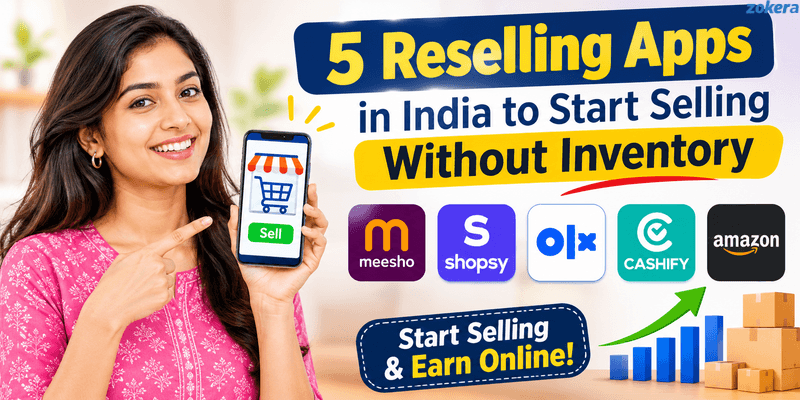
Starting an online reselling business in India does not always require a physical shop or large investment. Many platforms let individuals sell products through online marketplaces. Some also help people sell pre-owned items without purchasing new inventory.
However, not every reselling app offers completely free selling. Some require you to own products, arrange stock, or pay marketplace fees. Understanding these differences can help you choose the right platform.
This guide covers five reselling apps in India, their business models, selling processes, costs, and earning opportunities. It also explains how beginners can start selling without taking unnecessary financial risks.
Quick Answer
Meesho and Shopsy are suitable for businesses that want to sell products through online marketplaces. OLX helps individuals sell pre-owned products directly to buyers, while Cashify specialises in used electronics. Amazon Seller is another option for businesses selling their own products online.
If you want to start without purchasing inventory, consider selling items you already own through OLX or Cashify. Marketplace selling through Meesho, Shopsy, and Amazon generally requires products and business preparation.
Key Takeaways
Reselling apps help individuals and businesses reach online buyers.
OLX and Cashify are useful for selling pre-owned products.
Meesho, Shopsy, and Amazon Seller operate primarily as seller marketplaces.
Zero registration fees do not always mean zero business costs.
Your actual profit depends on product costs, selling prices, fees, and returns.
Beginners should understand each platform's payment and delivery process before listing products.
What Are Reselling Apps and How Do They Work?
Reselling apps are online platforms that help individuals and businesses sell products to customers without opening a physical store. You can sell products you already own, source items from suppliers, or list pre-owned products for interested buyers.
The process is generally simple:
Create an account: Register on a reselling platform and complete the required details.
Choose products: Select products you want to sell or list items you already own.
Upload product details: Add clear photographs, descriptions, and selling prices.
Find customers: Share product listings or connect with interested buyers through the platform.
Complete the sale: Manage orders, payments, delivery, and returns according to the platform's policies.
For example, you can list unused furniture on OLX and connect directly with buyers. On Meesho, you register as a seller, upload product catalogues, and manage customer orders through its seller platform.
Different Types of Online Reselling Models
Understanding the business models is important before choosing an app.
Product reselling: Purchase products from suppliers and sell them at a higher price.
Inventory-free selling: Promote products without keeping physical stock, depending on the platform's supported model.
Peer-to-peer selling: Sell your own used or unused products directly to interested buyers.
Marketplace selling: List your products on established platforms and fulfil customer orders.
These models have different investment requirements, responsibilities, and earning opportunities.
5 Best Reselling Apps in India
Here are five platforms that offer different ways to sell products online. They are not identical reselling apps, so choose according to your selling model.
1. Meesho

Meesho is an Indian e-commerce marketplace where sellers can list products across different categories. It offers opportunities for small businesses, manufacturers, and individual sellers looking to reach online customers.
The platform advertises zero commission and free seller registration. However, sellers must arrange products and meet the applicable registration requirements.
How to get started:
Visit the Meesho Supplier website.
Register using your mobile number and email address.
Provide the required GSTIN or eligible enrolment details.
Add your pickup address and bank account information.
Upload product catalogues and start receiving orders.
Key features:
Zero commission on product sales under its advertised seller model.
Free seller registration.
Product listings across multiple categories.
Shipping support through the platform.
A seven-day payment cycle after order delivery.
Investment requirements: Registration and listing are free. However, you need products to sell and must account for sourcing, packaging, and applicable shipping-related charges.
Best for: Small businesses, manufacturers, and sellers who want to reach customers across India.
2. Shopsy

Shopsy is an online shopping platform from Flipkart that allows sellers to reach customers looking for affordable products. It supports product listings across different categories and provides access to Flipkart's logistics ecosystem.
Shopsy advertises zero commission on its exclusive product verticals. However, other applicable seller fees may depend on the product and selling arrangement.
How to get started:
Visit the Shopsy Seller website.
Register your seller account.
Complete the required business and verification details.
Upload product information, images, and prices.
Manage orders through the seller dashboard.
Key features:
Access to Flipkart's customer ecosystem.
Zero commission on eligible Shopsy-exclusive verticals.
Online product catalogue management.
Logistics support.
Seller tools for order management.
Investment requirements: Registration is free, but selling requires products and fulfilment arrangements. Check the applicable fee policy before listing products.
Best for: Small businesses and sellers who want to expand their online product sales.
3. OLX

OLX is a classifieds marketplace where people can list used and new products for interested buyers. It is particularly useful for individuals who want to sell unused household items, furniture, electronics, vehicles, and other permitted products.
Unlike traditional reselling platforms, OLX connects buyers and sellers directly. You can create listings, communicate with potential buyers, negotiate prices, and arrange transactions.
OLX advertises no listing fees or commissions for its standard selling process. Additional paid listing or promotional options may have separate charges.
How to get started:
Download the OLX app or visit its website.
Create an account using your mobile number.
Select the relevant product category.
Upload clear product photographs.
Add a description and selling price.
Respond to buyer enquiries and negotiate.
Key features:
Direct communication with buyers.
Product listing and negotiation options.
Multiple categories for second-hand products.
Local selling opportunities.
No standard listing commission advertised.
Investment requirements: You can start without purchasing new inventory by selling products you already own. However, delivery or transportation may involve additional expenses.
Best for: Students, homemakers, and individuals who want to sell unused products and earn extra money.
4. Cashify

Cashify is a platform specialising in buying and selling refurbished electronics. It allows individuals to sell their old smartphones, laptops, tablets, and other supported electronic devices.
Unlike a traditional reselling marketplace, Cashify provides a buyback service. You enter your device details, receive an estimated price, and schedule a pickup after accepting the offer.
The platform advertises free doorstep pickup and payment after device verification.
How to get started:
Visit the Cashify website or download its app.
Select the electronic device you want to sell.
Enter the brand, model, and device condition.
Check the estimated selling price.
Schedule a pickup or choose an available store option.
Complete device verification and receive payment.
Key features:
Online device valuation.
Free doorstep pickup in supported locations.
Options for selling old smartphones and electronics.
Device inspection before finalising the sale.
Payment through supported digital methods.
Investment requirements: You do not need to purchase inventory. You can sell eligible electronics that you already own. The final offer depends on device condition and verification.
Best for: People who want to sell old smartphones, laptops, and other supported electronics without finding individual buyers.
5. Amazon Seller
Amazon Seller allows businesses and individuals to list products on Amazon India and reach customers across the country. It is suitable for sellers who want to establish an online business through an established marketplace.
You can list products, manage inventory, track orders, and monitor sales through Seller Central. Amazon also provides fulfilment options depending on the seller's requirements.
Amazon does not charge a separate listing or subscription fee for its standard selling arrangement. However, sellers may pay applicable referral, closing, shipping, and other service fees. Its fee structure was updated in September 2026.
How to get started:
Visit Amazon Seller India.
Create your seller account.
Complete the required business and tax details.
Add your products and catalogue information.
Choose an available fulfilment method.
Manage orders and track payments through Seller Central.
Key features:
Access to Amazon's customer base.
Product catalogue and inventory management.
Multiple fulfilment options.
Sales and performance reports.
Category-based selling fee structure.
Investment requirements: Registration does not require an upfront subscription fee under the standard arrangement. However, you need products to sell and must account for applicable marketplace and fulfilment costs.
Best for: Small businesses, manufacturers, and established sellers looking to expand their online reach.
Comparison of Reselling Apps in India
Before choosing a platform, compare its selling model, investment requirements, and payment process.
App | Selling model | Inventory needed? | Best suited for |
|---|---|---|---|
Meesho | Seller marketplace | Yes | Small businesses |
Shopsy | Seller marketplace | Yes | Online sellers |
OLX | Direct selling | Existing products | Individuals |
Cashify | Electronics buyback | Existing devices | Used-device sellers |
Amazon Seller | Seller marketplace | Yes | Businesses |
Note: Zero registration fees do not mean zero selling costs. Marketplace fees, product sourcing, packaging, shipping, and returns can affect your profit.
How to Choose the Right Reselling Platform
Choosing the right reselling platform depends on your products, budget, experience, and selling goals. Compare these factors before creating an account.
1. Check the Investment Requirements
Some platforms allow you to sell existing products without purchasing additional stock. Others require you to source products before accepting orders.
Check registration fees, product costs, shipping charges, and other applicable expenses.
2. Understand the Product Categories
Choose a platform that supports the products you want to sell.
For example, OLX is useful for second-hand furniture and electronics. Cashify focuses on used electronic devices, while Meesho and Shopsy support broader product categories.
3. Compare Payment and Settlement Methods
Check how the platform transfers your earnings and when payments become available.
Look for information about:
Payment settlement periods.
Bank transfer availability.
Minimum withdrawal requirements, if applicable.
Refunds and return adjustments.
4. Check Shipping and Return Policies
Shipping and returns can affect your profit. Understand who handles delivery, customer complaints, damaged products, and return requests.
Choose a platform with clear policies and suitable fulfilment options.
How to Start a Reselling Business Without Investment
You do not need to purchase expensive inventory to explore online selling. Start with products you already own or use a selling model that does not require stock.
Follow these steps to begin.
Step 1: Choose Your Selling Model
First, decide whether you want to sell used products, source new products, or promote products online.
Selling unused household items is a practical starting point because you do not need to purchase additional inventory.
Step 2: Select a Suitable Platform
Choose an app according to your product category and selling requirements.
For example, OLX works for used household products, while Cashify specialises in eligible electronic devices.
Step 3: Create Your Seller Account
Download the selected app or visit its official website. Complete registration and submit the required details.
Read the platform's terms before accepting any selling conditions.
Step 4: Add Product Information
Create product listings with accurate descriptions and clear photographs.
Include important details such as:
Product name and category.
Condition and specifications.
Selling price.
Available quantity.
Delivery or pickup arrangements.
Step 5: Set a Competitive Selling Price
Research similar products before deciding your price.
Consider product costs, marketplace fees, shipping, packaging, and potential returns. Avoid setting prices based only on competitor listings.
Step 6: Promote Your Products
Share product listings with interested buyers through social media and messaging platforms.
You can also use WhatsApp Status, Instagram posts, and relevant online communities to increase product visibility.
For more ideas, read our guide on how to make money from WhatsApp in India.
Step 7: Manage Orders and Customer Communication
Respond to enquiries, confirm product availability, and communicate delivery details clearly.
Keep records of orders, payments, expenses, and returns. Good customer service can help build trust and encourage repeat purchases.
How Much Can You Earn Through Reselling Apps?
Your earnings from reselling apps depend on what you sell, how much customers pay, and the expenses involved. There is no fixed income because sales and profit margins vary across products and platforms.
For example, suppose you sell 20 pre-owned products in a month at an average price of ₹500 each. Here's how the calculation would look:
Illustrative monthly earning calculation
Particulars | Amount |
|---|---|
Products sold | 20 |
Average selling price | ₹500 |
Total sales revenue | ₹10,000 |
Selling and delivery expenses | ₹1,000 |
Amount remaining | ₹9,000 |
In this example, you retain ₹9,000 after deducting the assumed selling expenses. This calculation assumes you already own the products and have no additional purchasing costs.
If you resell newly purchased products, you must also deduct product sourcing costs, packaging, platform fees, and applicable shipping charges. Therefore, your actual profit will depend on the total cost of completing each sale.
Remember: Total sales revenue is not the same as profit. Always calculate your expenses before estimating how much you can earn through reselling.
Tips to Increase Your Reselling Profit
Making consistent sales requires product research, competitive pricing, and good customer service.
Here are some practical ways to improve your results:
Choose products with demand: Research popular categories before listing products.
Use clear photographs: Good images help buyers understand product condition and quality.
Write accurate descriptions: Mention product specifications, defects, and other important details.
Compare competitor prices: Check similar listings before setting your selling price.
Respond quickly: Answer buyer questions and provide accurate information.
Track your expenses: Calculate your actual profit after fees, delivery, and returns.
Build customer trust: Avoid misleading product claims and communicate clearly.
Common Reselling Mistakes to Avoid
Beginners often focus only on selling prices without considering the complete selling process.
Avoid these mistakes when starting:
Ignoring platform fees: Check applicable charges before listing products.
Choosing products without research: Poor product selection can lead to unsold inventory.
Using misleading photographs: Always show the actual product condition.
Ignoring return policies: Understand who pays for returned or damaged products.
Expecting guaranteed income: Sales and earnings depend on customer demand.
Sharing sensitive information: Never share OTPs, passwords, or UPI PINs with buyers.
Paying registration fees to strangers: Register through official platform websites and avoid suspicious earning schemes.
Conclusion
Reselling apps in India offer different opportunities for individuals and businesses to sell products online. Meesho, Shopsy, and Amazon Seller support marketplace selling, while OLX and Cashify help individuals sell existing products. Choose a platform based on your investment capacity, product category, and selling requirements. Start small, track expenses, and focus on building customer trust before expanding your business.
Also Read:
Frequently Asked Questions (FAQs)
1. Which is the best reselling app in India?
Meesho and Shopsy are options for product sellers. OLX is suitable for selling used products, while Cashify specialises in used electronics. The best choice depends on your selling requirements.
2. Can I start reselling without investment?
Yes, you can start by selling unused products you already own through platforms such as OLX. However, starting a new-product selling business may require sourcing, packaging, and fulfilment expenses.
3. Which reselling app is best for beginners?
OLX and Cashify are practical options for beginners who want to sell existing products. Meesho and Shopsy are more suitable for people prepared to operate as online sellers.
4. How do reselling apps work?
Reselling apps connect sellers with potential buyers through online listings and marketplaces. Depending on the platform, sellers list products, negotiate prices, receive orders, or arrange product delivery.
5. Can I resell products without keeping stock?
Some selling models allow you to promote products without maintaining physical inventory. However, the platform must support that arrangement. Traditional seller marketplaces generally require you to manage product availability and fulfilment.
6. How much can I earn from reselling apps?
There is no fixed earning amount. Your income depends on successful sales, product margins, customer demand, platform charges, and other business expenses.
7. Which products are best for reselling in India?
Clothing, accessories, home decor, electronics, kitchen products, and pre-owned furniture can offer selling opportunities. Research local demand and competition before choosing a category.
8. Are reselling apps safe to use?
Established platforms provide structured selling processes, but users should still follow safety precautions. Verify buyers, use official payment methods, and avoid sharing sensitive financial information.
Comments (0)
Be the first to comment.