

The demand for digital products is growing rapidly in India, creating new opportunities for creators, freelancers, and entrepreneurs to earn online. From eBooks and online courses to Canva templates and AI prompt packs, digital products offer a low-cost way to build passive income without managing inventory or shipping. In this guide, you'll learn how to sell digital products in India, choose profitable ideas, find the best selling platforms, and create a sustainable income stream in 2026.
What Are Digital Products?
Digital products are products that customers can purchase and access online instantly.
Unlike physical products, they do not require:
- Manufacturing
- Packaging
- Inventory management
- Shipping
- Warehousing
After purchase, customers receive access through a download link, membership portal, or email.
Examples of Digital Products
Some of the most popular digital products include:
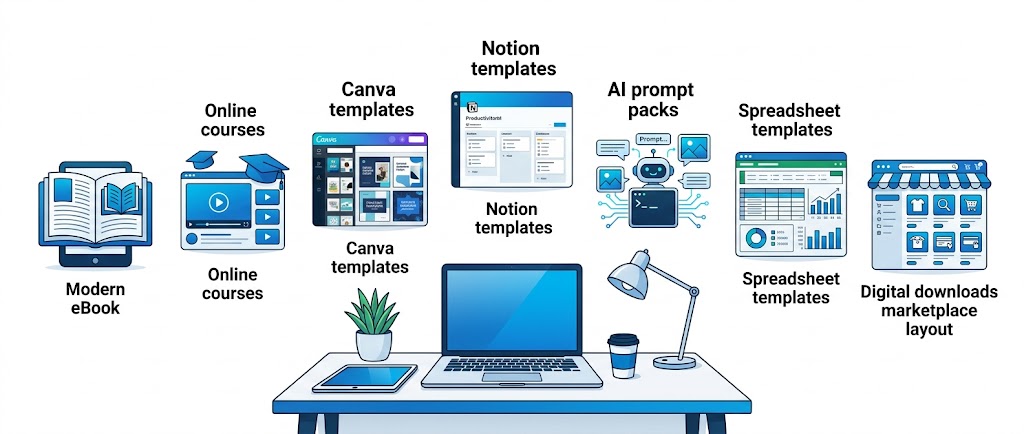
- eBooks
- Online courses
- Canva templates
- Notion templates
- AI prompt packs
- Spreadsheet tools
- Digital planners
- Stock photos
- Design assets
Because there are no production costs after creation, digital products offer significantly higher profit margins than physical products.
Why Digital Products Are Ideal for Passive Income
Digital products are attractive because they can be sold repeatedly without additional work.
For example:
A freelance writer gets paid once for a project.
An eBook creator can sell the same eBook hundreds of times.
This creates a scalable income model.
Key Benefits:
- Low startup costs
- High profit margins
- Global reach
- Unlimited sales potential
- Automated delivery systems
Many successful creators use digital products to diversify their income beyond client work, sponsorships, and advertising.
Why Selling Digital Products Is Booming in India in 2026

Several trends have made India one of the most promising markets for digital product businesses.
1. Growth of the Creator Economy
Millions of Indians are building audiences through:
- YouTube
- Blogs
- Podcasts
As creators grow their communities, they need ways to monetize beyond sponsorships.
Digital products solve this problem by allowing creators to sell knowledge, resources, and tools directly to their audience.
Benefits include:
- Full ownership of customer relationships
- Higher profit margins
- More predictable revenue
This is why many creators are launching products instead of relying solely on brand deals.
2. UPI Has Made Online Buying Easier
One major reason digital products are growing in India is the success of UPI.
According to official data published by NPCI, billions of transactions are processed through UPI every month.
This makes purchasing digital products extremely convenient.
Customers can pay using:
- UPI
- Net Banking
- Debit Cards
- Credit Cards
A faster checkout process often leads to higher conversion rates.
3. Low Investment Requirements
Starting a digital product business requires very little capital.
Most creators only need:
- A laptop
- Internet access
- A valuable skill
- Basic creation tools
Popular tools include:
- Canva
- Notion
- Google Docs
- ChatGPT
- Loom
Compared to traditional businesses, the financial risk is much lower.
4. Growing Demand for Digital Solutions
Modern consumers are actively looking for:
- Learning resources
- Productivity systems
- Business templates
- Marketing frameworks
- AI resources
Before creating a product, you can use Google Trends to validate whether demand for your topic is growing.
This simple step can prevent you from creating products that nobody wants.
Best Digital Products to Sell in India
Not every digital product performs equally well.
The best products solve a specific problem for a clearly defined audience.
1. eBooks and Digital Guides
eBooks remain one of the easiest digital products to create.
Popular topics include:
- SEO
- Content Writing
- Freelancing
- Personal Finance
- Digital Marketing
- AI Tools
Why eBooks Work
- Quick to create
- Easy delivery
- Low production costs
- High profit margins
Instead of creating a 200-page book, focus on solving one specific problem.
2. Online Courses
Online courses have one of the highest earning potentials among digital products.
Popular course topics include:
- SEO
- Content Writing
- Graphic Design
- Video Editing
- Social Media Marketing
- AI Productivity
According to research shared by HolonIQ, online learning continues to grow globally, creating more opportunities for educators and creators.
Benefits of Selling Courses
- Higher pricing potential
- Strong customer engagement
- Upselling opportunities
- Authority building
Courses work especially well when paired with templates, communities, or coaching programs.
3. Canva and Notion Templates
Templates save people time.
That's why they continue to be one of the fastest-growing digital product categories.
Popular examples include:
- Instagram templates
- LinkedIn carousel templates
- Budget planners
- Content calendars
- Project management dashboards
People don't buy templates because they can't create them.
They buy templates because they want faster results.
4. AI Prompt Packs
AI tools have become a part of everyday workflows for marketers, writers, designers, and business owners.
However, most users struggle to create prompts that generate high-quality outputs.
This has created a growing market for AI prompt packs.
Popular prompt categories include:
- ChatGPT prompts for content writers
- AI prompts for marketers
- LinkedIn content prompts
- YouTube script prompts
- E-commerce marketing prompts
Why AI Prompt Packs Sell Well
- Fast to create
- High profit margins
- Growing market demand
- Easy digital delivery
A well-organized prompt library can solve a specific problem and save users hours of trial and error.
5. Spreadsheet Templates
Spreadsheet templates remain one of the most underrated digital products.
Popular examples include:
- Expense trackers
- Budget planners
- SIP calculators
- Invoice templates
- Business dashboards
- Content planning sheets
These products are useful because they help people organize information and make better decisions.
Many creators successfully sell spreadsheet templates to freelancers, students, and small business owners.
How to Choose a Profitable Digital Product Niche
One of the biggest reasons digital products fail is poor niche selection.
Before creating anything, validate demand.
Step 1: Identify a Problem
The best digital products solve a specific problem.
Ask yourself:
- What skills do I have?
- What questions do people frequently ask me?
- What challenges have I solved personally?
Step 2: Validate Demand
Never rely on assumptions.
Use tools such as Google Trends to determine whether interest in a topic is increasing or declining.
Look for:
- Consistent search demand
- Existing competitors
- Active communities
- Popular YouTube content
If people are already spending money in a niche, that's a positive sign.
Step 3: Analyze Competitors
Competition is not a bad thing.
Competition validates demand.
Study:
- Product pricing
- Customer reviews
- Positioning
- Product formats
Look for customer complaints.
Those complaints often reveal opportunities to create a better solution.
Step 4: Find a Market Gap
The easiest way to stand out is by improving an existing solution.
Examples include:
- India-specific products
- Hindi-language resources
- Better design
- More updated information
- Improved customer support
ALSO READ: How to Sell Digital Products on Etsy
How to Create Your First Digital Product
Creating your first digital product is easier than most people think.
The goal is not perfection.
The goal is to solve one problem effectively.
Step 1: Research Audience Needs
Gather feedback through:
- Instagram polls
- LinkedIn posts
- Facebook groups
- Blog comments
- Customer interviews
Look for recurring questions.
Repeated questions often become profitable product ideas.
Step 2: Create a Simple Product
Your first product should be focused.
Examples:
- A 30-page eBook
- A Canva template pack
- A Notion dashboard
- A spreadsheet toolkit
Avoid spending months creating a massive product before validating demand.
Step 3: Design a Professional Product
Presentation matters.
Invest time in:
- Product cover design
- Mockups
- Screenshots
- Product descriptions
A professionally packaged product usually converts better than a poorly presented one.
Step 4: Set Up Automated Delivery
Choose a platform that automates payment collection and product delivery.
Popular options include:
- Instamojo
- Gumroad
- Payhip
- Shopify
Best Platforms to Sell Digital Products in India
1. Instamojo
Instamojo is one of the easiest platforms for Indian creators.
Benefits include:
- UPI payments
- Easy setup
- Instant delivery
- Indian customer support
Best for beginners and freelancers.
2. Gumroad
Gumroad is ideal for creators targeting global audiences.
Key features include:
- International payments
- Membership support
- Affiliate programs
- Product analytics
It is particularly useful for selling templates, courses, and digital downloads.
3. Payhip
Payhip offers a beginner-friendly solution that combines:
- Product hosting
- Checkout pages
- Affiliate management
- Discount coupons
It is a strong option for creators launching their first product.
4. Shopify
Shopify is best suited for creators building a long-term brand.
Advantages include:
- Full customization
- Better SEO control
- Scalable infrastructure
- Extensive app ecosystem
While costs are higher, Shopify offers more flexibility for growing businesses.
Platform Comparison
| Goal | Recommended Platform |
|---|---|
| Beginner | Instamojo |
| International Audience | Gumroad |
| Budget-Friendly | Payhip |
| Brand Building | Shopify |
How to Price Digital Products for Maximum Sales
Creating a great product is important, but pricing it correctly is equally important.
Many creators struggle because they either charge too little or set unrealistic prices.
The best pricing strategy focuses on value rather than effort.
1. Use Value-Based Pricing
Instead of asking:
"How many hours did I spend creating this?"
Ask:
"What outcome does this product help the customer achieve?"
For example:
A content calendar saves planning time.
An SEO checklist helps improve rankings.
A budgeting template helps manage finances effectively.
The bigger the result, the more customers are willing to pay.
2. Offer Product Bundles
Bundling multiple products together can increase your average order value.
Example Bundle
Content Creator Toolkit:
- Canva Templates
- AI Prompt Pack
- Content Calendar
- Social Media Checklist
Individual Value: ₹2,000
Bundle Price: ₹999
Customers perceive more value while you increase revenue.
3. Launch With Introductory Pricing
When launching a new product, offer a limited-time discount.
Example:
Regular Price: ₹999
Launch Price: ₹499
Offer Duration: 48 Hours
This creates urgency and helps generate early sales and testimonials.
Common Pricing Mistakes
Avoid:
Copying competitor pricing
Constant discounting
Undervaluing your expertise
Competing only on price
Focus on solving problems instead.
How to Market Digital Products in India
Even the best digital product won't sell if nobody knows it exists.
That's why marketing is critical.
The most successful creators combine multiple traffic sources.
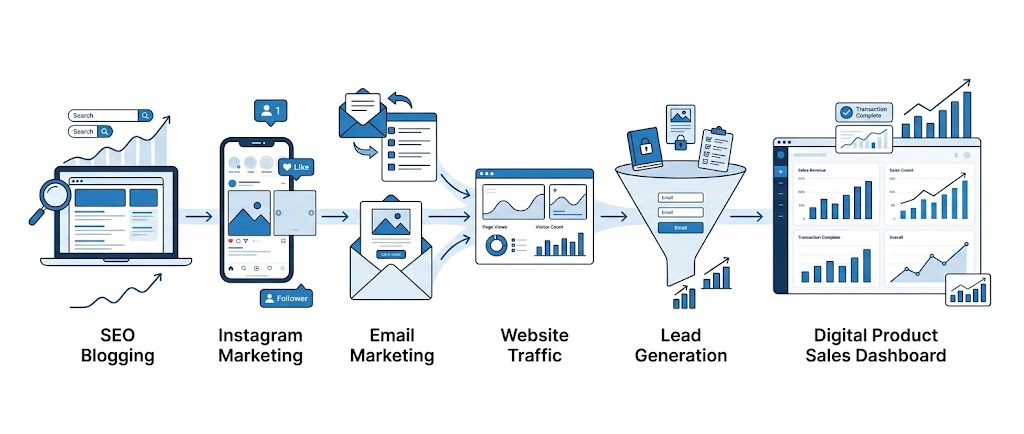
1. SEO Blogging
SEO remains one of the most reliable ways to generate long-term traffic.
Instead of constantly posting on social media, SEO content can bring visitors for months or even years.
Benefits include:
- Free organic traffic
- Higher buying intent
- Long-term visibility
- Consistent lead generation
Blog Topics That Work Well
- How-to guides
- Product comparisons
- Tutorials
- Industry insights
- Resource roundups
For example:
If you sell Canva templates, you could write:
- Best Canva Templates for Small Businesses
- Canva Design Tips for Beginners
- How to Create Professional Instagram Posts
This attracts relevant visitors who may later purchase your products.
2. Instagram Marketing
Instagram continues to be one of the strongest channels for creators.
However, people rarely buy because of direct promotions.
Instead, they buy after seeing value.
Create content such as:
- Tips
- Mini tutorials
- Case studies
- Before-and-after examples
For instance:
Instead of saying:
Buy My Content Calendar
Show:
How This Content Calendar Saves 5 Hours Every Week
According to research from Social Insider, short-form educational content consistently drives strong engagement across social media platforms.
3. Email Marketing
Email marketing remains one of the highest-converting marketing channels available.
Unlike social media, you own your email audience.
Benefits include:
- Higher conversion rates
- Repeat purchases
- Better customer relationships
- Stronger launch results
How to Build an Email List
Step 1:
Create a free resource such as:
- Checklist
- Template
- Mini Guide
Step 2: Offer it in exchange for an email address.
Step 3: Send valuable content regularly.
Step 4: Promote relevant paid products.
Many successful creators generate a significant portion of their revenue from email subscribers.
Common Mistakes to Avoid
Avoid these common mistakes when selling digital products:
Creating products without validating demand
Targeting a broad audience instead of a specific niche
Competing only on price
Ignoring SEO and relying solely on social media
Not building an email list from day one
Launching without collecting customer feedback
Overcomplicating your first product
Failing to update and improve products regularly
Focusing on a specific audience, validating demand, and building long-term traffic channels can significantly improve your chances of success.
GST and Legal Requirements for Selling Digital Products
Before launching your business, understand the basics of compliance.
GST Requirements
GST obligations depend on factors such as:
- Revenue
- Business structure
- Customer location
For the latest information, refer to the official Income Tax India portal and consult a qualified Chartered Accountant.
Income Tax Considerations
Income generated through digital products is generally considered business income.
Maintain records of:
- Sales
- Expenses
- Marketing costs
- Platform fees
Proper bookkeeping simplifies tax filing and financial planning.
Copyright Protection
Your digital products are automatically protected once created.
However, adding clear licensing terms is highly recommended.
Include:
- Usage rights
- Commercial use permissions
- Redistribution restrictions
- Refund policies
You can learn more through the official Copyright Office India website.
Conclusion
Selling digital products in India is one of the most accessible ways to build passive income in 2026. With low startup costs, growing online demand, and easy payment options like UPI, creators can turn their knowledge and skills into scalable digital assets. Focus on solving a specific problem, validate demand before creating, and use channels like SEO, Instagram, and email marketing to attract customers. Start with one product, improve it based on feedback, and gradually expand your digital product portfolio.
ALSO READ:
- How to Sell Canva Templates (Zero Investment Guide for Beginners – 2026)
- How to Earn Money with Canva AI
- Best Free AI Tools for Indians in 2026
- Best Free AI Video Tools for Indian Creators in 2026
- Best AI Tools for Students (Free + Paid)
- How to Create a YouTube Script Using AI Tools
- Top 5 Free AI Tools That Help You Make Money Online
Frequently Asked Questions (FAQs)
Q1. How can beginners sell digital products in India?
Beginners can start with eBooks, Canva templates, Notion dashboards, or spreadsheet tools. Platforms such as Instamojo, Payhip, and Gumroad make selling digital products simple.
Q2. Which digital product is most profitable in 2026?
Online courses often generate the highest revenue, while AI prompt packs, Canva templates, and Notion templates offer excellent profit margins with lower creation costs.
Q3. Can I earn passive income by selling digital products?
Yes. Once your product and delivery systems are automated, digital products can continue generating income without requiring ongoing manual effort.
Q4. Which platform is best for selling digital products in India?
Instamojo is ideal for beginners, Gumroad works well for global audiences, and Shopify is best for creators building a long-term brand.
Comments (0)
Be the first to comment.