

College life comes with lectures, assignments, and exams, but it also brings growing expenses. The good news is that students no longer need to wait until graduation to start earning. From freelancing and online tutoring to creator commerce and content creation, there are several flexible ways to make money while studying. In this guide, you'll discover the best side hustles for students in India in 2026, including earning potential, required skills, and tips to get started with little or no investment.
Why College Is the Best Time to Start a Side Hustle
Most working professionals wish they had started earlier. College gives you something incredibly valuable: flexibility.
You can test ideas, learn skills, make mistakes, and improve without carrying the pressure of rent, family expenses, or large financial responsibilities.
Starting a side hustle during college helps you:
- Build professional skills early
- Create a portfolio before graduation
- Develop confidence
- Learn business and communication skills
- Earn extra income
- Stand out during placements
A student who starts freelancing in their second year may graduate with dozens of completed projects. Someone who starts a YouTube channel in their first year may already have an audience by graduation. The earlier you begin, the greater your advantage becomes.
Best Side Hustles for Students in India 2026
1. Creator Commerce with Zokera
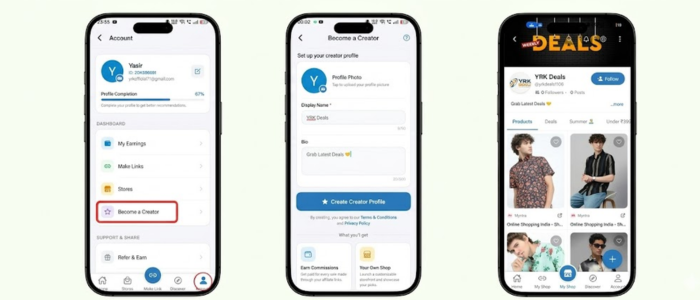
If you have even a small following on Instagram, YouTube, or any social platform, creator commerce is your fastest path to earning. Zokera is India's creator commerce and cashback platform where you set up a free digital storefront, share products from 1000+ brand partnerships on Zokera, and earn every time a follower buys through your link. The best part: your followers earn cashback on every purchase they make through your Zokera storefront, making them more likely to buy and come back again.
What makes it student-perfect:
- Zero investment to start
- Works even with a micro audience (500 to 5,000 followers)
- Fully passive once your storefront is live
- No need to create your own product
- Your followers benefit too, since they earn cashback on purchases
You do not need to be a big influencer. Even a college food page, a meme account, or a study tips profile with a few hundred engaged followers is enough to start earning through creator commerce. The key is trust, not follower count.
Create your free Zokera storefront and start earning today.
Realistic monthly earnings: Rs 2,000 to Rs 10,000 (scales with your audience)
2. Freelance Writing and Content Creation
If you can write clearly in English or Hindi, brands and agencies will pay you for it. Blog posts, product descriptions, social media captions, and email newsletters are always in demand. Platforms like Upwork and Fiverr help you find your first clients. Rates for Indian student freelancers typically start at Rs 500 to Rs 1,500 per article and rise quickly with a strong portfolio.
The fastest way to land your first client is to pick one niche you know well, whether that is EdTech, personal finance, fitness, or technology, and write 2 to 3 sample articles to show in your portfolio. You do not need anyone's permission to publish samples. Post them on Medium or a free WordPress blog and share the link when pitching clients. Within 30 days of consistent outreach, most beginners land their first paid project.
Realistic monthly earnings: Rs 5,000 to Rs 25,000 starting
3. Graphic Design Using Canva and Figma
You do not need a design degree to earn from design in 2026. Canva has made it accessible for anyone to create professional social media graphics, pitch decks, wedding invitations, and YouTube thumbnails. Small businesses in India are constantly looking for affordable designers. List your services on Fiverr starting at Rs 500 per design and build up from there.
Instagram reels covers, LinkedIn carousels, and festival posts for local businesses are high-demand, low-effort gigs that repeat every month. Once you land one business as a client, they will come back every week. Build a set of 5 to 10 template-based designs you can deliver quickly, and your per-hour rate becomes very attractive for a college student.
Realistic monthly earnings: Rs 8,000 to Rs 30,000
4. Online Tutoring
Are you good at Maths, Science, English, or competitive exam prep? Students from Class 8 onwards are willing to pay for quality online tutoring. Platforms like Superprof and UrbanPro connect you with students. You can also promote yourself on Instagram or local WhatsApp groups. Two to three students per week can easily bring in Rs 10,000 a month.
In 2026, online tutoring has expanded well beyond school subjects. Coding for beginners, spoken English, IELTS preparation, and entrance exam coaching for NEET, JEE, and CUET are all categories with strong student demand. If you have cleared any of these exams recently, you have a natural credibility advantage that no platform profile can replicate.
Realistic monthly earnings: Rs 10,000 to Rs 40,000
5. Social Media Management for Local Businesses
Every restaurant, boutique, and coaching center near your college needs a social media presence but has no time to manage it. Offer to handle their Instagram, create 3 posts a week, and respond to comments for a monthly retainer. You already know how social media works. That knowledge is worth real money to a small business owner.
Walk into any local business, show them your own social media profile as proof of concept, and offer to manage theirs for Rs 3,000 to Rs 5,000 a month to start. After 60 days of consistent posting and visible growth, you renegotiate. Most students who do this seriously end up managing 3 to 5 clients simultaneously before they graduate, turning it into a full agency.
Realistic monthly earnings: Rs 5,000 to Rs 15,000 per client
6. Affiliate Marketing
Affiliate marketing means promoting products and earning a commission on every sale. You can do this through a blog, YouTube channel, Instagram page, or even a WhatsApp community. Amazon Associates and similar programs let you start for free. Once you build an audience, multiple affiliate programs running together can stack into a solid monthly income.
The trick with affiliate marketing is to recommend products you have genuinely used or researched thoroughly. Students who review gadgets, books, courses, or stationery earn well because their audience trusts their opinion. Authenticity converts far better than generic promotional posts.
Realistic monthly earnings: Rs 3,000 to Rs 50,000+ depending on niche and traffic
7. Selling Digital Products
Notes, templates, e-books, Notion dashboards, and study planners are all digital products students buy regularly. If you are good at organizing information, create a study template or revision notes PDF and sell it on Gumroad or Instagram. You create it once and earn from it repeatedly without any additional effort.
The best digital products to sell as a student are ones you already created for yourself. Your UPSC notes, your semester revision sheets, your internship tracker spreadsheet, these are products other students will pay for. Package them cleanly, add a cover page, and price them between Rs 49 and Rs 299. Even 50 sales a month at Rs 99 is Rs 4,950 in passive income.
Realistic monthly earnings: Rs 2,000 to Rs 20,000 (passive after launch)
8. YouTube and Short-Form Video Content
You do not need a camera or studio. A smartphone and natural light are enough to start a YouTube channel or post reels on Instagram. Pick a niche you know: exam prep, college life, tech reviews, cooking, or even day-in-my-life content. Monetization through ads, brand deals, and affiliate links kicks in faster than most people think once you stay consistent.
Short-form content on Instagram Reels and YouTube Shorts has lowered the barrier to growth dramatically. Viral reels with 1 lakh views can bring in brand collaboration inquiries even at 2,000 followers. Focus on value-first content, post consistently for 90 days, and the monetization follows naturally.
Realistic monthly earnings: Rs 5,000 to Rs 1,00,000+ (long-term)
9. Paid Internships
Not all internships are unpaid. In 2026, thousands of startups and companies post remote internships on Internshala, LinkedIn, and Unstop, paying Rs 5,000 to Rs 20,000 per month. Unlike a random side hustle, an internship also builds your resume, gives you real work experience, and sometimes converts into a full-time offer.
Remote internships in marketing, content writing, UI/UX design, data entry, and customer support are the most accessible for college students with no prior experience. Apply to 10-15 listings per week, and personalize each application with a one-line explanation of why you are a good fit. Quantity plus quality is the formula that works.
Realistic monthly earnings: Rs 5,000 to Rs 20,000
10. AI-Assisted Micro-Services
In 2026, AI tools like ChatGPT, Canva AI, and Midjourney let one person deliver services that previously required a full team. You can offer logo design, short video editing, SEO blog writing, or data entry using AI tools to speed up delivery. Sell these services on Fiverr as micro-gigs starting at Rs 500 to quickly build a recurring client base.
The students who learn to use AI tools as productivity multipliers, rather than crutches, are building an unfair advantage. A student who uses AI to write a first draft and then edits for quality can deliver 5 articles a day instead of 1. That speed directly translates to more orders, better reviews, and higher rates.
Realistic monthly earnings: Rs 8,000 to Rs 35,000
Common Mistakes Students Make with Side Hustles
Starting a side hustle is easy. Sticking with it long enough to earn consistently is where most students drop off. Here are the mistakes to avoid from day one:
1. Trying too many things at once. Pick one hustle, give it 30 days, and see real results before adding a second. Spreading across three platforms with half effort produces nothing.
2. Waiting to be perfect. Your first freelance article does not need to be award-winning. Your first design does not need to be agency-level. Ship it, get feedback, and improve. Done beats perfect every time.
3. Not treating it like a business. Track your hours, track your earnings, save receipts, and set a weekly income target. Students who treat their side hustle casually earn casually. Students who treat it like a business earn like a business.
4. Underpricing out of fear. Charging Rs 100 for a logo or Rs 200 for a 1,000-word article is not humility. It is underselling your time. Research what others charge on Fiverr and price yourself competitively from the start.
How to Choose the Right Side Hustle as a Student
Ask yourself these four questions before picking one:
1. How many hours per week can I realistically commit? (Aim for 5 to 10 hours to start)
2. Do I want active income (paid per hour or project) or passive income (earned while sleeping)?
3. What skill do I already have or can learn in 2 weeks?
4. Do I have an audience online, even a small one?
If you answered yes to the last question, start with creator commerce first. It is the fastest zero-investment path to real earnings for students with any online following.
How Much Can Students Realistically Earn in India?
| Side Hustle | Starting Monthly Earnings | Growth Potential |
|---|---|---|
| Creator Commerce | Rs 2,000 to Rs 10,000 | High (scales with followers) |
| Freelance Writing | Rs 5,000 to Rs 15,000 | High |
| Graphic Design | Rs 8,000 to Rs 30,000 | Very High |
| Online Tutoring | Rs 10,000 to Rs 40,000 | Medium |
| Social Media Management | Rs 5,000 to Rs 15,000/client | High |
| Affiliate Marketing | Rs 3,000 to Rs 50,000+ | Very High |
| Digital Products | Rs 2,000 to Rs 20,000 | High (passive) |
| YouTube / Short Video | Rs 5,000 to Rs 1,00,000+ | Very High (long-term) |
| Paid Internships | Rs 5,000 to Rs 20,000 | Medium |
| AI Micro-Services | Rs 8,000 to Rs 35,000 | Very High |
Conclusion
Starting a side hustle as a student is one of the smartest ways to build income, skills, and real-world experience before graduation. Whether you choose freelancing, tutoring, content creation, affiliate marketing, or creator commerce, consistency matters more than perfection. Pick one opportunity, stay committed, and focus on learning as you grow. The sooner you start, the greater your chances of creating a valuable income stream alongside your studies.
ALSO READ:
- Captcha Typing Jobs Without Investment in India (2026 Real Guide)
- How to Earn Money from Instagram Reels (2026 Guide)
- 10 Genuine Work-from-Home Jobs for Students in India (2026 Guide)
- Best Real Money Earning Apps in 2026: Earn Money Online Safely and Easily
- How to Earn ₹1000 Daily: Realistic Ways That Work in 2026
- 10 Smart Ways to Make Money While Traveling in 2026
- Top 5 Genuine Earning Apps in India (No Investment Required) – 2026 Edition
Frequently Asked Questions (FAQs)
Q1. Which is the best side hustle for students in India with no investment?
Creator commerce, freelancing, affiliate marketing, and content creation can all be started with little or no investment.
Q2. Can I earn money as a student without experience?
Yes. Many students start with internships, freelance writing, tutoring, and creator commerce without prior professional experience.
Q3. How many hours should I dedicate to a side hustle?
Most students can start with 5 to 10 hours per week and gradually increase their commitment.
Q4. Is affiliate marketing good for students?
Yes. It provides an opportunity to earn commissions while learning valuable digital marketing skills.
Q5. Can I freelance while studying full-time?
Absolutely. Freelancing offers flexible schedules and allows students to work around classes and exams.
Q6. Which side hustle has the highest earning potential?
Online tutoring, YouTube, affiliate marketing, creator commerce, and AI-powered services generally offer the highest long-term earning potential.
Q7. Do I need a GST number to earn from side hustles?
GST requirements depend on your business activity, location, turnover, and applicable regulations. Students should review current GST rules or consult a tax professional as income grows.
Comments (0)
Be the first to comment.