
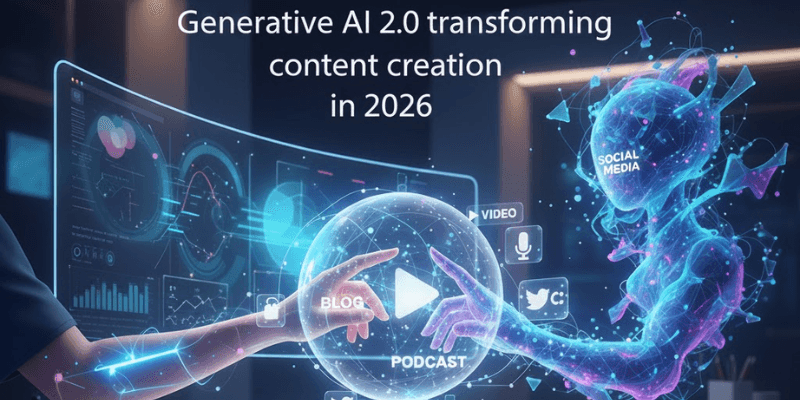
In 2026, content creation has entered a completely new phase with the rise of Generative AI 2.0. What started as basic AI-assisted writing has now evolved into intelligent, context-aware, and highly personalized content systems. From blogs and social media posts to videos and podcasts, AI is reshaping how creators plan, produce, and distribute content. Rather than replacing humans, Generative AI 2.0 acts as a creative partner, helping creators work faster, smarter, and more strategically than ever before.
What Is Generative AI 2.0?
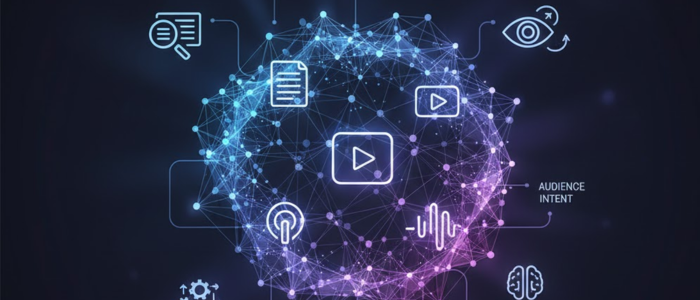
Generative AI 2.0 refers to the advanced evolution of generative artificial intelligence systems that go far beyond simple text generation. These systems are designed to understand context, intent, audience behavior, and creative goals before producing content.
Unlike earlier AI tools that mainly focused on rewriting or grammar correction, Generative AI 2.0 can reason, analyze, and adapt. It can generate content that feels personalized, natural, and aligned with brand voice while supporting multiple formats such as text, images, videos, and audio.
Generative AI 1.0 vs Generative AI 2.0
Earlier versions of generative AI worked more like assistants. They followed instructions but lacked strategic understanding. Generative AI 2.0, however, behaves more like a collaborator.
Generative AI 1.0 was limited to generic outputs, required heavy editing, and struggled with tone consistency. Generative AI 2.0 offers deeper contextual awareness, real-time personalization, multimodal creation, and improved reasoning abilities. This evolution is what makes AI truly useful for modern content creation in 2026.
How Content Creation Worked Before 2026
Before 2026, content creation was a largely manual and time-consuming process. Writers spent hours researching topics, analyzing competitors, finding keywords, structuring content, and editing drafts. Even with basic AI tools, much of the work still depended on human effort.
AI tools were mainly used for grammar checks, paraphrasing, and basic idea generation. They lacked originality, strategic depth, and personalization. Scaling content without losing quality was difficult, and adapting content for different platforms required separate workflows.
In short, AI acted as a helper, not as a creative partner.
How Generative AI 2.0 Changed Content Creation in 2026
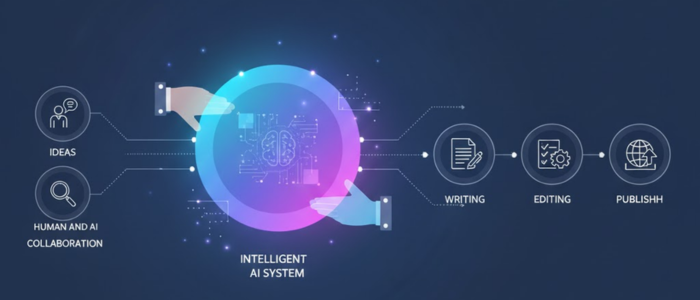
1. AI as a Creative Partner
One of the biggest changes in 2026 is that AI is no longer just a tool, it is a creative partner. Generative AI 2.0 assists creators from the very beginning of the content process, starting with ideation and planning.
AI now helps with topic selection based on trends, audience interest, and content gaps. It suggests content structures, storytelling angles, and tone variations. This allows creators to focus more on creativity, insights, and value instead of repetitive groundwork.
2. Hyper-Personalized Content at Scale
Personalization has become a core expectation in 2026. Generative AI 2.0 enables creators to deliver personalized content experiences without manually rewriting content multiple times.
AI can adapt content based on user intent, location, language, experience level, and behavior. A single article can have multiple variations tailored for beginners, professionals, or industry experts. This improves engagement, retention, and conversion rates significantly.
3. Faster Research and Smarter Fact Synthesis
Research has been completely transformed by Generative AI 2.0. Instead of manually browsing dozens of sources, creators can rely on AI to analyze large datasets and summarize key insights.
AI helps identify trends, competitor strategies, and content gaps while reducing research time drastically. Although human verification is still necessary, creators can now focus more on interpretation and storytelling rather than data collection.
4. Multimodal Content Creation
Content creation in 2026 is no longer limited to written articles. Generative AI 2.0 allows creators to produce multimodal content from a single idea.
From one core topic, AI can generate blog posts, social media content, video scripts, podcast outlines, email newsletters, and even visual concepts. This makes content distribution more efficient while maintaining consistency across platforms.
Impact of Generative AI 2.0 on Content Creators
1. Bloggers and SEO Writers
For bloggers and SEO writers, Generative AI 2.0 has shifted the focus from keyword stuffing to search intent and topical authority. AI helps with topic clustering, semantic keyword usage, internal linking strategies, and readability optimization.
In 2026, search engines reward content that genuinely helps users. AI assists writers in aligning content with these expectations while saving time and effort.
2. Social Media Creators
Social media creators benefit from AI-driven trend analysis and platform-specific recommendations. Generative AI 2.0 analyzes engagement patterns and suggests content formats, captions, and posting schedules.
This allows creators to stay relevant without constantly chasing trends manually, while still maintaining authenticity and creativity.
3. Businesses and Brands
For businesses, Generative AI 2.0 has made content marketing more scalable and strategic. Brands can maintain a consistent voice across platforms while personalizing content for different customer segments.
AI supports automated content calendars, conversion-focused copywriting, and performance-based optimization, making content marketing more data-driven and efficient.
Skills Content Creators Must Learn in 2026
While Generative AI 2.0 simplifies many tasks, it also demands new skills from creators.
Prompt engineering has become essential for getting high-quality outputs. Creators must also learn AI editing and refinement to ensure originality, clarity, and emotional depth.
Most importantly, human creativity, critical thinking, and ethical judgment remain irreplaceable. AI enhances creativity, but it cannot replace human experience or perspective.
Challenges and Limitations of Generative AI 2.0
Despite its advantages, Generative AI 2.0 has limitations. Over-dependence on AI can weaken a creator’s unique voice. There are also risks related to originality, plagiarism, and AI-generated inaccuracies.
AI systems may occasionally produce incorrect or misleading information, making human fact-checking essential. Ethical content creation and responsible AI use are crucial for long-term credibility.
The Future of Content Creation Beyond 2026
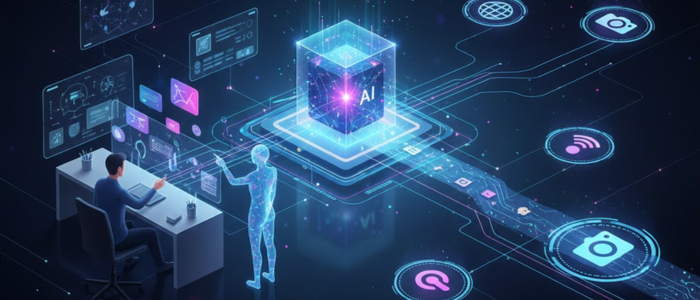
The future of content creation lies in human-AI collaboration. AI will continue to evolve, but human creativity, storytelling, and emotional intelligence will remain central.
Beyond 2026, content will focus more on experience, authenticity, and community engagement rather than sheer volume. Creators who adapt to this collaborative model will stay ahead in the digital landscape.
Conclusion
Generative AI 2.0 has redefined content creation in 2026 by making it faster, more personalized, and more strategic. While AI handles research, scalability, and optimization, human creativity and judgment remain essential. The creators who succeed are those who use AI as a partner, not a replacement, and continue to deliver meaningful, trustworthy, and experience-driven content.
Recommended Reads: The Future of AI in 2026: Top 5 Smart Gadgets That Will Change Your Life
Best AI Tools for Students (Free + Paid) – 2026 Guide
Free AI Certification Courses for Students in India
How to Create a YouTube Script Using AI Tools
Top 5 Free AI Tools That Help You Make Money Online
FAQs - Generative AI 2.0 and Content Creation
Q1. How does Generative AI 2.0 help content creators?
It helps creators save time, improve content quality, personalize at scale, and optimize content for SEO and multiple platforms.
Q2. Is Generative AI 2.0 better than old AI writing tools?
Yes, it offers a deeper understanding, better reasoning, personalization, and multimodal content creation compared to older AI tools.
Q3. Can Generative AI 2.0 replace human writers?
No, it supports human writers but cannot replace creativity, experience, and critical thinking.
Q4. Is AI-generated content safe for SEO in 2026?
Yes, as long as the content is original, helpful, user-focused, and properly edited by humans.
Q5. What skills should content creators learn in 2026?
Creators should learn prompt engineering, AI editing, ethical AI usage, and human-AI collaboration skills.
Q6. Does Google accept AI-written content?
Yes, Google accepts AI-generated content if it provides value, accuracy, and a good user experience.
Q7. Is Generative AI 2.0 useful for beginners?
Yes, it helps beginners learn faster, structure content better, and improve writing efficiency.
Comments (0)
Be the first to comment.