
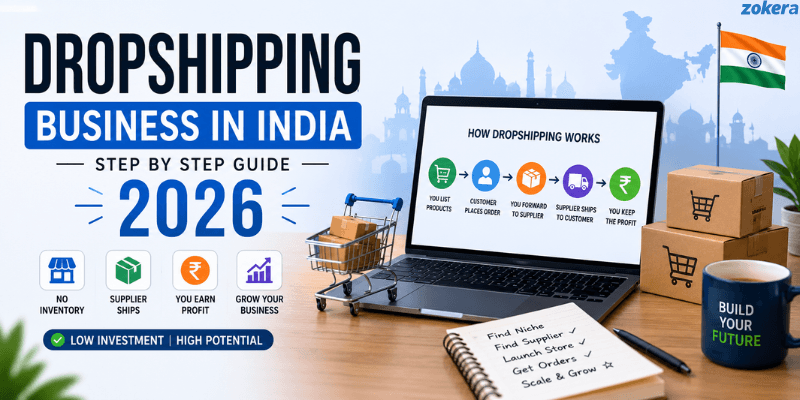
Thinking about starting an online business without holding inventory? Dropshipping lets you sell products without warehousing, packaging, or shipping headaches. But most guides skip the real numbers: actual costs, GST rules, and what it takes to make consistent profit. This guide breaks down every step for 2026.
What Is Dropshipping and How Does It Work?
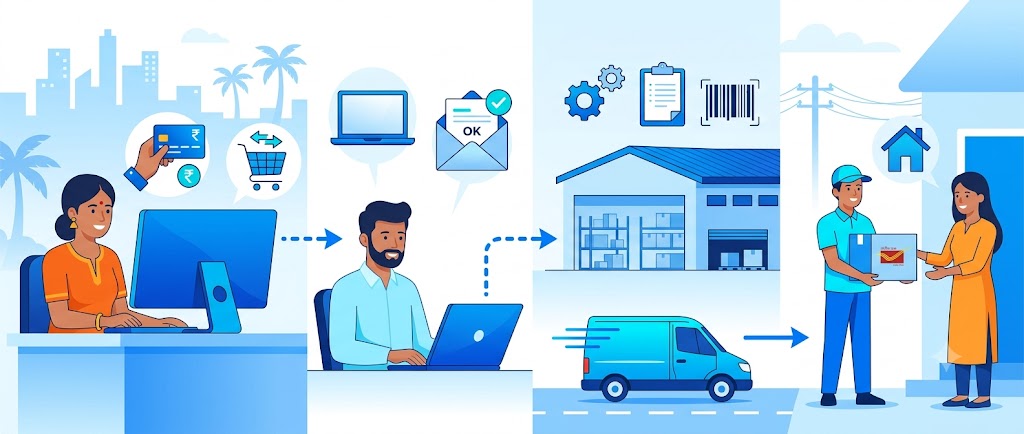
Dropshipping is a business model where you sell products online without ever holding stock. Here is how the flow works:
You list products on your own store or a marketplace
A customer places an order and pays you
You forward that order to your supplier
The supplier packs and ships the product directly to the customer
You keep the difference between your selling price and the supplier's cost
There is no warehouse, no upfront bulk purchase, and no shipping logistics to manage yourself. Your job is product selection, marketing, pricing, and customer service. The supplier handles everything behind the scenes.
Is Dropshipping Legal and Profitable in India in 2026?
Yes, dropshipping is completely legal in India. You do need to stay compliant on a few fronts:
GST registration becomes mandatory once your annual turnover crosses ₹40 lakh (lower threshold for some states and categories)
You must issue proper invoices and follow consumer protection rules on returns and refunds
If you export to international customers, exports currently carry a 0% GST rate, which helps margins
On profitability, realistic numbers matter more than hype. Most beginners earn somewhere between ₹15,000 and ₹50,000 per month in their first six months, and that range depends heavily on niche, ad spend, and supplier reliability. Profit margins in dropshipping typically run 15 to 40 percent per sale after supplier cost, platform fees, and shipping are accounted for. Anyone promising guaranteed lakhs per day without months of testing is skipping the real work.
Step by Step: How to Start Dropshipping Business in India in 2026
Step 1: Choose a Profitable Niche
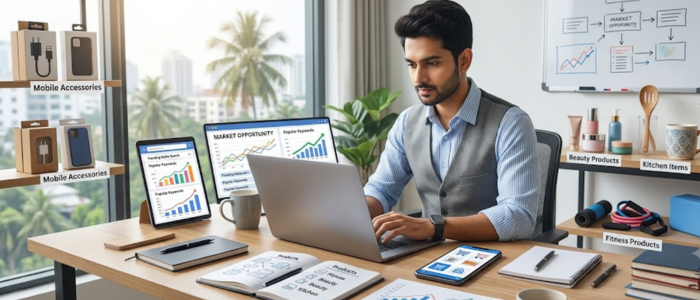
Your niche decides everything else: who you sell to, what you stock virtually, and how much room you have to grow. Before finalizing anything, check the following:
Search demand using Google Trends and keyword tools
Competition level on marketplaces like Amazon and Flipkart
Profit margin potential (compare retail price against supplier cost)
Repeat purchase potential (products people reorder monthly perform better than one time buys)
Shipping practicality (avoid fragile or oversized items early on)
Some steady performing niches in India right now:
Home and kitchen essentials
Fashion accessories and jewelry
Fitness and wellness products
Mobile accessories
Baby care items
Beauty and personal care
Mix a few evergreen products (steady demand year round) with one or two trending items so you are not entirely dependent on a single seasonal spike.
Step 2: Find Reliable Suppliers
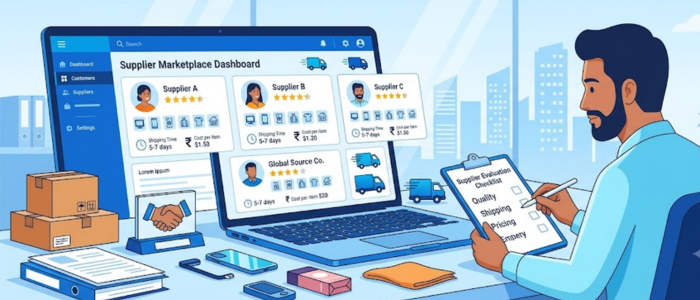
A supplier who ships late or sends damaged goods will sink your ratings fast, regardless of how good your marketing is. Look at:
Domestic marketplaces like IndiaMART and TradeIndia for faster delivery
Global platforms like AliExpress and Alibaba for wider catalogs
Print on demand and dropshipping specific platforms if you are in apparel or custom products
Supplier response time and return/replacement policy before committing
Sample orders to test quality firsthand
If your niche overlaps with the creator commerce space, platforms like Zokera are worth exploring too. It runs on a storefront model with 1000+ brand partnerships already in place, and it pays creators follower cashback on storefront purchases, which is a different but complementary earning path if you are already building an audience alongside your store.
Step 3: Set Up Your Online Store
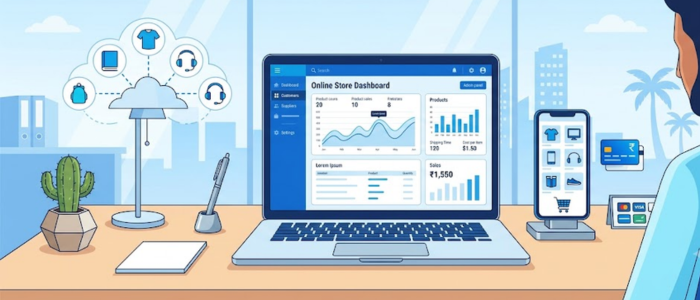
You have two broad paths here, and each suits a different stage of business:
Your own website: Shopify or WooCommerce give you full control over branding and customer data, but you handle your own traffic generation.
Marketplaces: Meesho, Amazon, and Flipkart offer built in traffic and buyer trust, useful when you are still testing products.
A comparison to help you decide:
| Factor | Own Website | Marketplace |
|---|---|---|
| Investment | Higher | Lower |
| Control over branding | Full | Limited |
| Traffic | You generate it | Platform provides it |
| Buyer trust | Takes time to build | Instant |
| Best suited for | Scaling an established niche | Testing and beginners |
Most beginners start on a marketplace, validate demand, then move to their own store once they have consistent orders.
Step 4: Complete GST and Business Registration
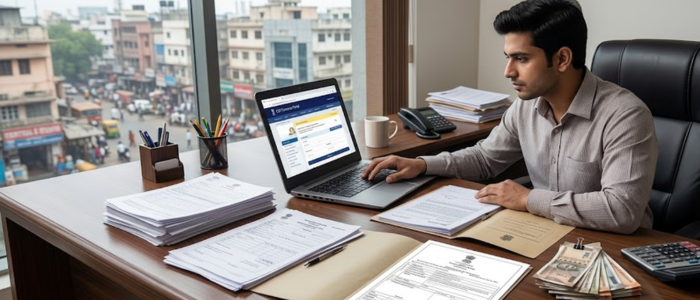
Do not skip this even if you plan to start small:
Register for GST once your turnover approaches the ₹40 lakh threshold, or earlier if you want to sell on marketplaces that require it upfront
Choose a business structure: sole proprietorship works for most solo sellers starting, while a private limited company suits those planning to raise funding later
Open a separate current account for business transactions to keep your books clean
You can apply for GSTIN directly through the official GST portal
Step 5: Choose Your Payment Gateway
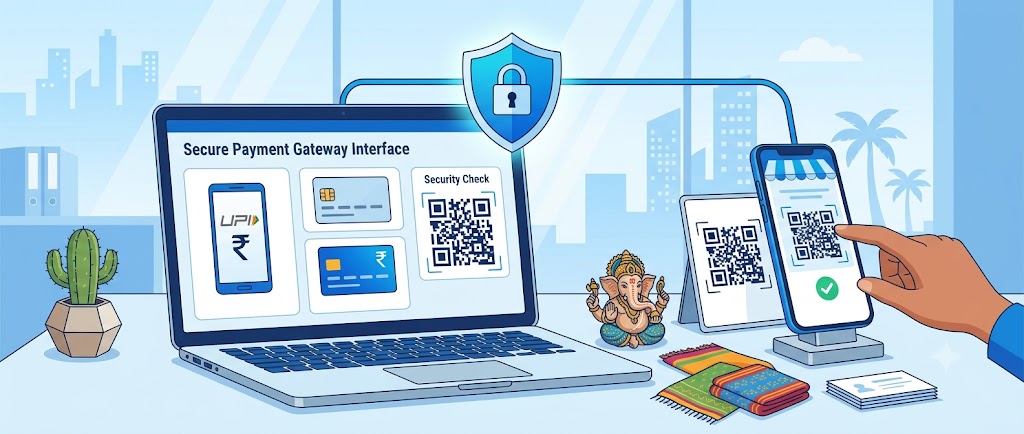
Your payment gateway choice affects both conversion rate and operational cost. Evaluate:
Transaction fees and setup charges
Support for UPI, cards, wallets, and Cash on Delivery
PCI DSS compliance for customer data safety
Integration ease with your store platform
Chargeback and fraud protection tools
Cash on Delivery matters more in India than in most markets, particularly for Tier 2 and Tier 3 buyers who are still building trust in online payments, a trend the RBI's own data on digital payments continues to track closely. Razorpay, Instamojo, and Cashfree are common choices among Indian sellers for exactly this reason.
Step 6: Price Your Products Correctly
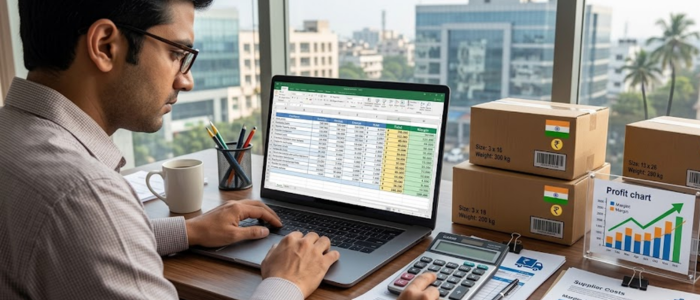
Use this formula as your baseline:
Selling Price = Product Cost + Platform Fee + Shipping Cost + Desired Profit
For example, if your product costs ₹400, the platform fee is ₹80, shipping runs ₹70, and you want a ₹150 profit, your selling price should be ₹700.
Common pricing mistakes to avoid:
Pricing too low just to compete, which erodes your margin
Ignoring return and replacement costs in your calculation
Not checking what competitors charge for the same or similar product
Forgetting platform commission when setting your final price
Step 7: Market Your Store
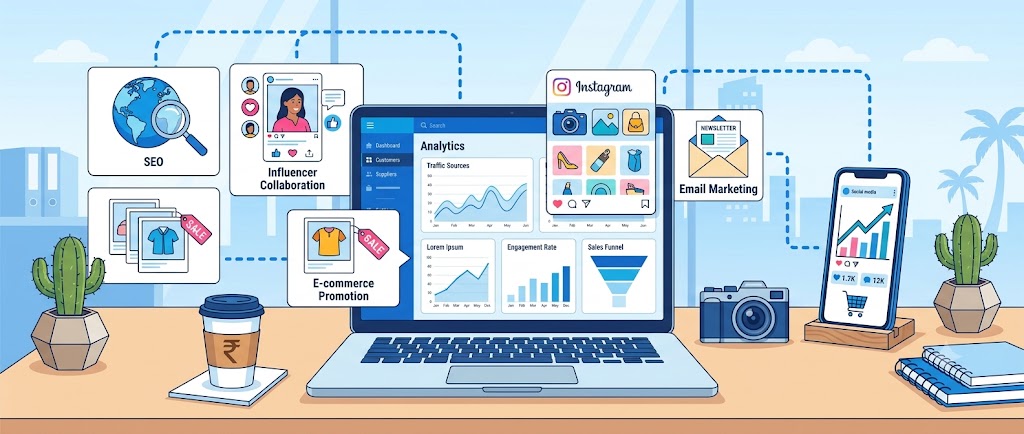
Once your store is live, visibility is everything. Channels worth testing, one at a time rather than all at once:
Instagram Reels and Stories showing the product in use
WhatsApp Business broadcasts for direct customer communication
SEO focused content marketing (blogs, guides, comparison content)
Paid ads on Google and Meta, starting small and scaling what converts
Influencer partnerships in your niche for social proof
Email marketing to retain and re-engage past buyers
Write product titles and descriptions with your main keyword plus a clear benefit. For example, instead of "Tote Bag," try "Women's Large Tote Bag for Office and Travel, Premium Quality." Add clear, well-lit images from multiple angles, since product photos directly affect conversion on marketplaces.
Step 8: Track, Optimize, and Scale
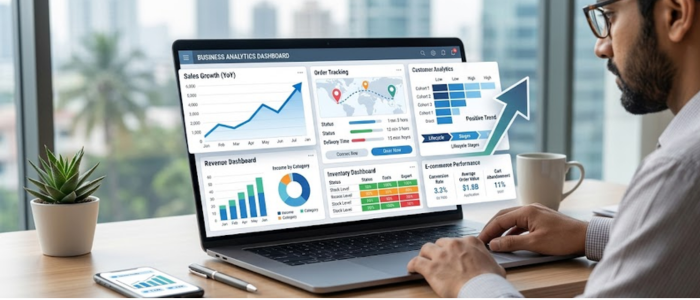
Once orders start coming in consistently:
Apply the 80/20 rule: identify the 20 percent of products driving 80 percent of revenue and double down on those
A/B test titles, images, and pricing rather than guessing
Automate repetitive tasks like order confirmations and shipping updates
Offer loyalty discounts to repeat customers, since retention costs less than new customer acquisition
Track profit and loss weekly, not just monthly, so problems get caught early
How Much Does It Cost to Start Dropshipping in India?
Costs scale with how professional a setup you want from day one:
Bare minimum setup (₹500 to ₹3,000):
Free store builder tools or marketplace listing (no cost)
Organic marketing only (Instagram, WhatsApp)
Minimal product testing budget
Standard setup (₹8,000 to ₹15,000):
Shopify or WooCommerce hosting and domain
Basic payment gateway setup
Small paid advertising budget for testing
Scaling setup (₹25,000 and above):
Paid ads across Google and Meta
Professional product photography
Marketing automation tools and email platforms
Possibly hiring support for customer service or fulfillment
India's dropshipping and creator led ecommerce market has been growing steadily, driven by rising smartphone penetration and digital payment adoption across Tier 2 and Tier 3 cities, which means the cost of entry keeps getting more accessible each year.
Best Platforms to Start Dropshipping in India (2026)
| Platform | Fees | Ease of Use | Best For |
|---|---|---|---|
| Meesho | Low | Very easy | Absolute beginners, zero investment |
| Amazon | High | Medium | Established sellers wanting reach |
| Flipkart | Medium | Medium | Balanced reach and pricing control |
| Shopify + Indian suppliers | Medium | Advanced | Sellers ready to build their own brand |
Pros and Cons of Dropshipping in India
Pros:
Low upfront investment compared to inventory based business
No warehousing or logistics management
Work from anywhere with just a laptop and internet
Easy to test and drop products that do not perform
Scalable once you find winning products
Cons:
Profit margins are thinner than inventory based selling
You depend heavily on supplier reliability
Quality control is harder since you never see the product before it reaches the customer
Competition is high in popular niches
Conclusion
Starting a dropshipping business in India in 2026 does not require a big budget or years of ecommerce experience. What it does need is a clear niche, a supplier you can actually rely on, and a pricing and marketing system you stick with long enough to see results. Start with one platform, test two or three products at a time, and let real order data guide your next move rather than guesswork. The sellers who last are the ones treating this as a real business from day one, not a quick side income experiment.
ALSO READ:
- How to Sell Canva Templates (Zero Investment Guide for Beginners – 2026)
- How to Sell Digital Products in India and Earn Passive Income in 2026
- How to Earn Money with Canva AI
- Best Free AI Tools for Indians in 2026
- Best Free AI Video Tools for Indian Creators in 2026
- Best AI Tools for Students (Free + Paid)
- How to Create a YouTube Script Using AI Tools
- Top 5 Free AI Tools That Help You Make Money Online
Frequently Asked Questions (FAQs)
Q1. Do I need GST to start dropshipping in India?
Not immediately. You can start on platforms like Meesho with limited categories, but GST becomes mandatory once turnover crosses ₹40 lakh or if you want to sell more broadly.
Q2. How much can I earn from dropshipping in India?
Most beginners earn between ₹15,000 and ₹50,000 per month within the first six months, depending on niche, ad spend, and supplier quality.
Q3. Which platform is best for beginners?
Meesho and Instagram based selling are the easiest entry points since they need minimal upfront investment.
Q4. Can students start a dropshipping business?
Yes, many students run dropshipping stores part time using just a laptop and a few hours a day.
Q5. Is dropshipping still profitable in India in 2026?
Yes, provided you choose the right niche, a reliable supplier, and invest consistently in marketing rather than expecting instant results.
Q6. Do I need technical skills to start?
No. Store builders like Shopify and marketplaces like Meesho are built for non-technical users, though basic comfort with a smartphone or laptop helps.
Q7. What is the biggest reason dropshipping stores fail?
Poor supplier reliability and picking products with no real demand are the two most common reasons stores shut down within the first year.
Comments (0)
Be the first to comment.