
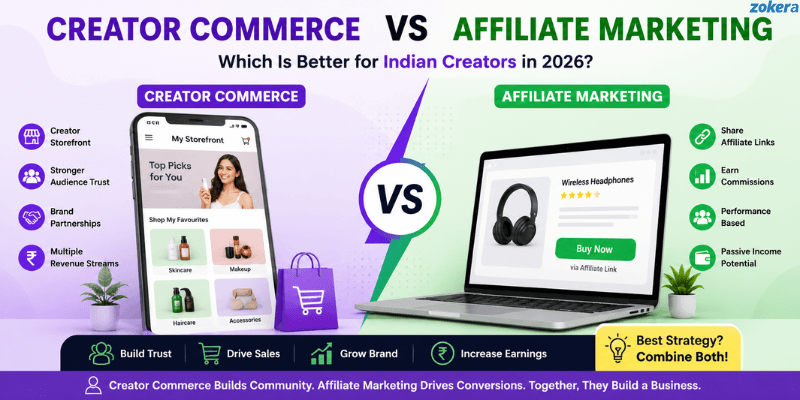
The creator economy in India is expanding rapidly, creating new opportunities for creators to monetize their audience beyond traditional brand sponsorships and ad revenue. Two of the most popular monetization models today are Creator Commerce and Affiliate Marketing.
While Affiliate Marketing has been around for years, Creator Commerce is emerging as a more community-driven approach that focuses on trust, product discovery, and creator-owned shopping experiences. If you're a creator, influencer, blogger, or publisher, understanding the strengths and limitations of both models can help you choose the right strategy for sustainable growth in 2026.
Creator Commerce vs Affiliate Marketing: Quick Comparison
| Feature | Creator Commerce | Affiliate Marketing |
|---|---|---|
| Primary Goal | Build trust-driven shopping experiences | Earn commissions through referrals |
| Revenue Source | Storefront sales, partnerships, commissions | Affiliate commissions |
| Audience Relationship | Community-focused | Conversion-focused |
| Brand Partnerships | Long-term collaborations | Usually campaign-based |
| Ownership | Creator-owned storefront | Limited ownership |
| Best For | Creators with engaged audiences | Bloggers and publishers |
| Growth Potential | High | Moderate to High |
| Revenue Diversification | Multiple streams | Mostly commission-based |
What Is Creator Commerce?
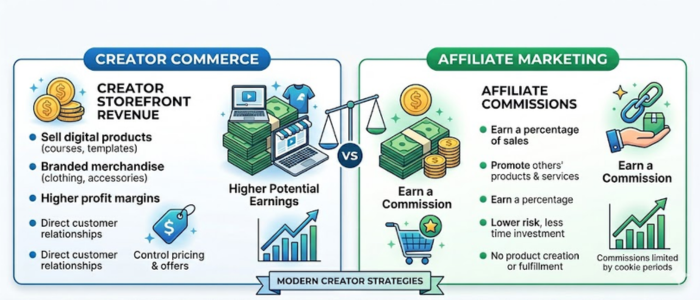
Creator Commerce is a monetization model where creators influence purchasing decisions through curated product recommendations, storefronts, shopping collections, and trusted content.
Instead of simply sharing links, creators build personalized shopping experiences around products they genuinely use and recommend. This approach strengthens audience trust and improves purchase intent.
The growth of Creator Commerce has been accelerated by platforms such as Instagram Creators and YouTube Creators, which continue to expand shopping and monetization opportunities for creators.
Example of Creator Commerce
A beauty creator may build a storefront featuring:
- Skincare essentials
- Makeup recommendations
- Haircare products
- Seasonal product collections
Followers can browse these products in one place and shop based on trusted recommendations.
What Is Affiliate Marketing?
Affiliate Marketing is a performance-based marketing model where creators earn a commission whenever someone purchases through their referral link.
Creators promote products, services, or software and receive a percentage of each successful sale.
Popular programs such as Amazon Associates and the Shopify Affiliate Program have helped millions of creators monetize their content.
Example of Affiliate Marketing
A tech blogger reviews a smartphone and includes affiliate links within the review. When readers purchase through those links, the blogger earns a commission.
Creator Commerce vs Affiliate Marketing: Key Differences
Ownership and Control
Affiliate marketers depend on third-party programs and commission structures controlled by brands.
With Creator Commerce, creators have more ownership because they can build storefronts, organize product collections, and create a branded shopping experience.
Winner: Creator Commerce
Audience Relationship
Affiliate Marketing is primarily focused on conversions.
Creator Commerce focuses on building trust and long-term relationships with followers.
When audiences repeatedly purchase products recommended by a creator, loyalty and engagement often increase.
Winner: Creator Commerce
Revenue Sources
Creator Commerce Revenue Sources
- Storefront sales
- Product recommendations
- Brand partnerships
- Sponsored collections
- Affiliate commissions
- Cashback-driven shopping
Affiliate Marketing Revenue Sources
- Product commissions
- Software referrals
- Service referrals
- Lead generation
Winner: Creator Commerce
Brand Partnerships
Brands increasingly prefer creators who can influence purchasing decisions and generate measurable sales.
According to research published by Influencer Marketing Hub, performance-driven creator partnerships continue to grow as brands focus more on ROI-based marketing.
Winner: Creator Commerce
Long-Term Growth Potential
Affiliate Marketing can generate high income, but growth often depends on traffic and conversion rates.
Creator Commerce helps creators build long-term assets around their audience and personal brand.
Winner: Creator Commerce
How Earnings Work in Both Models
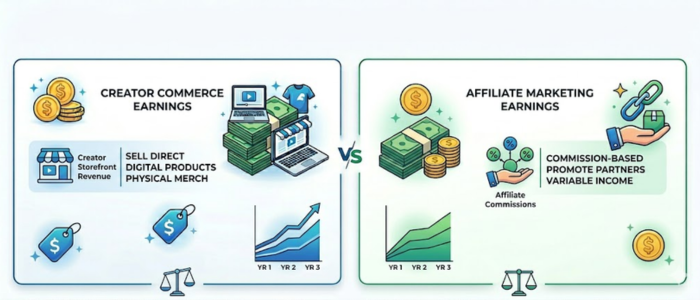
Earnings in Creator Commerce
Creators earn whenever followers purchase products through their storefronts or recommendations.
Additional revenue opportunities include:
- Sponsored campaigns
- Brand retainers
- Exclusive partnerships
- Performance bonuses
- Product launches
Platforms like Zokera are helping Indian creators monetize recommendations more effectively by combining creator storefronts, cashback-driven shopping, and access to products from 1000+ brands.
ALSO READ: How to Set Up Your Zokera Creator Storefront in Minutes
Earnings in Affiliate Marketing
Affiliate marketers earn a percentage of every successful sale generated through their referral links.
Income typically depends on:
- Traffic volume
- Audience quality
- Conversion rates
- Product pricing
- Commission percentages
Many publishers continue to build successful businesses through Affiliate Marketing alone.
Creator Commerce vs Affiliate Marketing: Earnings Comparison
| Factor | Creator Commerce | Affiliate Marketing |
|---|---|---|
| Revenue Sources | Multiple | Mostly commissions |
| Repeat Purchases | High | Moderate |
| Brand Deals | Common | Limited |
| Audience Loyalty Impact | High | Moderate |
| Long-Term Growth | Strong | Moderate |
| Business Ownership | High | Low |
| Revenue Diversification | High | Limited |
For creators with engaged communities, Creator Commerce often creates stronger long-term earning opportunities.
Which Model Is Best for Different Types of Creators?
Best for Nano Creators
Nano creators often have highly engaged audiences.
Because trust matters more than follower count, Creator Commerce can perform exceptionally well even with a smaller audience.
Best for Micro Influencers
Micro influencers can benefit from both models.
Many creators build storefronts while also using affiliate links to generate additional income.
Best for Macro Influencers
Larger creators often gain more value from Creator Commerce because brands are willing to invest in long-term creator partnerships.
Best for Bloggers and Publishers
Affiliate Marketing remains highly effective for:
- Bloggers
- Review websites
- SEO publishers
- Niche content sites
Search-driven traffic often converts well through affiliate programs.
Benefits of Creator Commerce
Higher Audience Trust
Recommendations feel more authentic because they are integrated naturally into content.
Better Brand Relationships
Brands increasingly prefer creators who can drive measurable purchases.
Storefront Ownership
Creators can organize products and create personalized shopping experiences.
Multiple Revenue Streams
Creators can earn from:
- Product sales
- Brand campaigns
- Storefront purchases
- Affiliate commissions
- Sponsored collections
Stronger Community Building
Creator Commerce strengthens the relationship between creators and followers through trusted recommendations.
Benefits of Affiliate Marketing
1. Easy to Start:
Most affiliate programs are free to join.
2. Low Barrier to Entry:
No storefront setup is required.
3. Wide Range of Opportunities:
Thousands of affiliate programs are available across industries.
4. Passive Income Potential:
Well-ranked content can continue generating commissions for years.
5. Flexible Promotion Methods:
Affiliate products can be promoted through:
- Blogs
- YouTube videos
- Social media
- Email newsletters
- Podcasts
ALSO READ: What Brands Look for When Choosing a Creator to Work With
Can You Use Both? The Hybrid Model
The most successful creators in 2026 are combining Creator Commerce and Affiliate Marketing rather than choosing one model.
A common strategy is:
1. Build a creator storefront.
2. Recommend products naturally through content.
3. Include affiliate links where appropriate.
4. Partner directly with brands.
5. Track and optimize performance.
This hybrid model creates multiple income streams while maintaining audience trust.
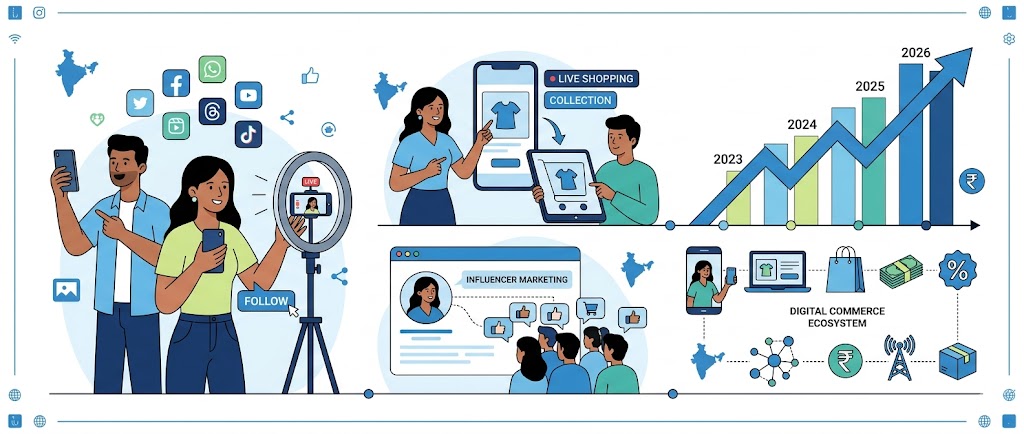
Why Creator Commerce Is Growing Faster in India
1. Growth of the Creator Economy
Millions of Indian creators are building audiences across social platforms and content channels.
2. Trust-Based Shopping
Consumers increasingly trust recommendations from creators more than traditional advertisements.
3. Better Monetization Technology
Modern Creator Commerce platforms make it easier to create storefronts, track sales, and manage recommendations.
4. Community-Led Buying Decisions
People often buy products because they trust the creator rather than the brand.
5. Rise of Cashback Commerce
Consumers actively seek more value while shopping.
Platforms like Zokera combine creator recommendations with cashback opportunities, creating benefits for creators, followers, and brands simultaneously.
Common Mistakes Creators Make
1. Promoting Too Many Products
Too many recommendations can reduce trust and hurt conversions.
2. Choosing Products Only for Commissions
Creators should prioritize audience value over commission rates.
3. Ignoring Analytics
Track:
- Clicks
- Sales
- Conversions
- Revenue
Data-driven decisions improve performance.
4. Relying on One Revenue Source
Diversification helps reduce risk and create a stable income.
Expert Verdict: Which Model Wins in 2026?
For most Indian creators, Creator Commerce offers stronger long-term growth potential because it combines trust, commerce, and community building.
However, Affiliate Marketing remains one of the easiest and most effective monetization strategies available today.
The best approach is not choosing one over the other.
The most successful creators are combining Creator Commerce and Affiliate Marketing to build diversified and sustainable creator businesses.
Quick Decision Guide
| If You Want... | Choose |
|---|---|
| Passive Income | Affiliate Marketing |
| Long-Term Brand Building | Creator Commerce |
| Higher Audience Trust | Creator Commerce |
| Easy Setup | Affiliate Marketing |
| Multiple Revenue Streams | Creator Commerce |
| Best Overall Strategy | Hybrid Model |
Key Takeaways
Creator Commerce focuses on trust, storefronts, and community-driven shopping.
Affiliate Marketing focuses on commission-based referrals.
Creator Commerce offers stronger long-term growth opportunities.
Affiliate Marketing remains easy to start and scale.
Many successful creators use both models together.
Cashback-driven commerce is creating new monetization opportunities.
The hybrid model combines the strengths of both approaches.
Conclusion
Creator Commerce and Affiliate Marketing are both powerful monetization models, but they serve different purposes. Affiliate Marketing remains an excellent starting point for creators who want to earn commissions through product recommendations.
Creator Commerce goes a step further by helping creators build stronger relationships with their audience through personalized shopping experiences and creator-owned storefronts.
For most creators in 2026, the winning strategy is not to choose a single model. It is combining Creator Commerce and Affiliate Marketing to build a sustainable, diversified, and scalable creator business.
ALSO READ:
- Zokera Auto-DM: Turn Every Instagram Comment Into a Sale
- Commission vs Sponsorship: Which Is Actually Better for Creators in 2026?
- How to Get Brand Collaborations as a Small Creator in 2026
- 5 Ways to Earn Money on Zokera Without a Huge Following
- How to Make Money from Your Social Media Following in India
FAQs: Creator Commerce vs Affiliate Marketing
Q1. Is Creator Commerce better than Affiliate Marketing?
For creators with engaged audiences, Creator Commerce often provides stronger long-term growth opportunities.
Q2. Can beginners start Creator Commerce?
Yes. Even creators with small but engaged communities can benefit from Creator Commerce.
Q3. Is Affiliate Marketing still profitable in 2026?
Yes. Affiliate Marketing remains one of the most effective monetization models for creators and publishers.
Q4. Can creators use both models together?
Absolutely. Many successful creators combine both approaches.
Q5. What is a Creator Storefront?
A Creator Storefront is a curated collection of products recommended by a creator.
Q6. Why is Creator Commerce growing in India?
Growing creator audiences, trust-based shopping, and better monetization tools are driving adoption.
Q7. Which model is better for Instagram creators?
Most Instagram creators benefit from combining Creator Commerce and Affiliate Marketing.
Q8. Can bloggers benefit from Creator Commerce?
Yes, although Affiliate Marketing often remains their primary monetization method.
Q9. Do brands prefer Creator Commerce?
Increasingly, yes. Brands value creators who can drive measurable purchases.
Q10. What is the future of Creator Commerce?
Creator Commerce is expected to become one of the fastest-growing creator monetization models over the next decade.
Comments (0)
Be the first to comment.