
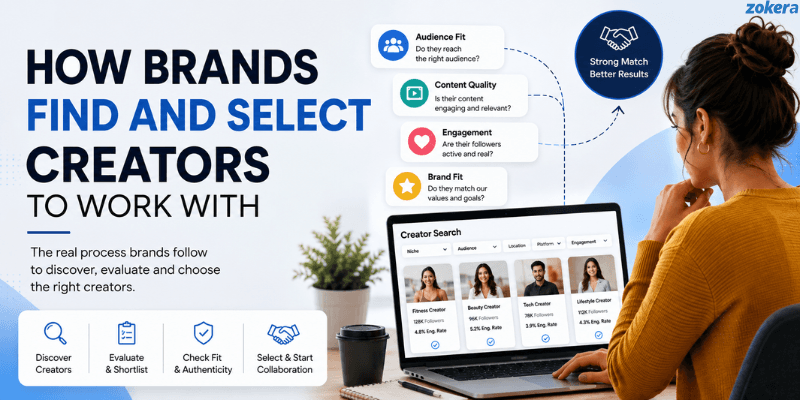
Brands do not choose creators based on follower count alone. They look at audience fit, content quality, creator reputation, engagement, platform presence, and campaign goals before making a decision. Today, brands can discover creators through social media, creator marketplaces, agencies, and creator platforms. Understanding how this process works can help creators build stronger profiles, improve their visibility, and increase their chances of getting selected for brand collaborations.
How Brands Find Creators to Work With
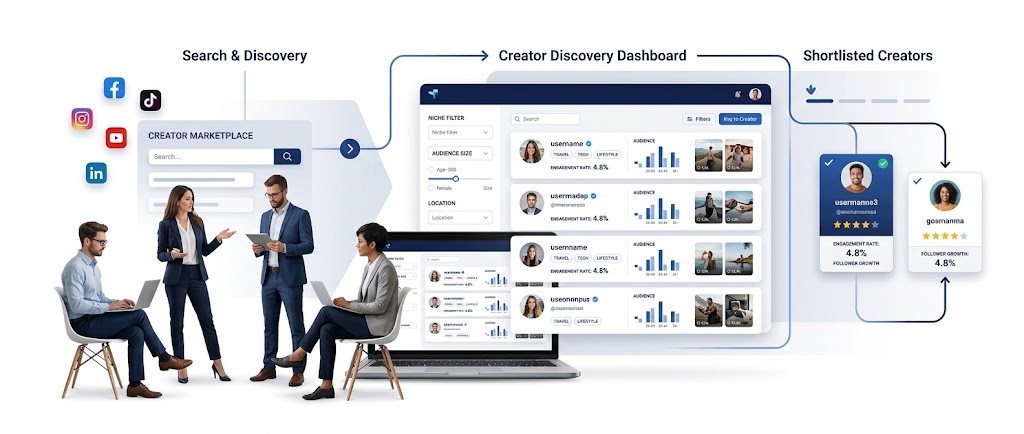
Brands use several methods to discover creators. The right method depends on the campaign, target audience, budget, platform, and type of content they need.
IAB's 2025 Creator Economy Ad Spend & Strategy Report found that identifying the right creators remains a major challenge for brands. The report also shows that creator reputation and audience alignment are among the leading selection criteria.
Here are the most common ways brands discover potential creators.
1. Social Media Search
Social media is one of the easiest places for brands to discover creators.
A brand team may search Instagram, YouTube, or another platform for creators in a specific niche. They can look at hashtags, content topics, locations, and audience interests.
For example, a skincare brand may search for creators who regularly post skincare routines, product reviews, tutorials, or beauty tips.
This is why having a clear niche matters. When your content consistently focuses on one category, brands can understand your expertise faster.
2. Instagram Creator Marketplace
Instagram has a dedicated Creator Marketplace that helps brands discover and evaluate creators for branded content partnerships.
Brands can search for creators, use filters, view creator insights, and assess whether a creator fits their campaign. Creators can also add interests and showcase their work through a creator portfolio.
This creates an important opportunity for creators. Instead of relying only on inbound DMs, they can make their profile easier for brands to discover.
3. Creator Platforms and Networks
Brands can also use creator marketplaces like Zokera to find potential partners.
These platforms can organize creator information in one place. Brands can review niches, audiences, content, performance, and other campaign-related information.
This makes the discovery process faster when a brand needs to compare many creators.
4. Agencies and Talent Networks
Some brands work with influencer marketing agencies or creator management companies.
An agency may already have relationships with creators across different categories. When a brand shares a campaign brief, the agency can recommend creators who match the requirements.
For creators, this means professional relationships can create opportunities beyond direct outreach.
5. Previous Collaborations and Referrals
Past work can also lead to new opportunities.
A brand may discover a creator through another campaign, an agency recommendation, or a referral from another creator.
Strong campaign work can therefore become a creator's own discovery channel.
If you consistently deliver quality content and meet deadlines, previous partnerships can help build credibility for future campaigns.
What Brands Look for When Selecting Creators

Finding a creator is only the first step.
After discovery, brands usually evaluate whether the creator is suitable for the specific campaign. They want to know if the creator can reach the right people and represent the product naturally.
IAB's research found that creator reputation, audience alignment, target-platform presence, brand-value alignment, past performance, and ease of collaboration are important factors in creator selection.
Let's look at the factors that can influence this decision.
Audience Fit
Audience fit is one of the most important factors.
A brand does not simply want a large audience. It wants access to people who could actually be interested in its product or service. Deloitte's research on influencer marketing notes that brands increasingly evaluate whether a creator's audience genuinely aligns with their target consumer, not just its size.
Brands may consider:
Audience interests
Location
Age groups
Content preferences
Niche relevance
Potential buying intent
A relevant audience gives the brand a clearer reason to invest in the collaboration.
Content Quality
They want to see whether the creator can present products in an engaging and natural way. A creator's previous Reels, videos, reviews, tutorials, and sponsored posts can give brands an idea of what a campaign could look like. A well-organized creator storefront can also double as a portfolio, giving brands a quick way to see how a creator presents products in a real shopping context.
Creator Reputation
A brand's reputation is connected to the people who represent it.
Because of this, brands may review a creator's public content, previous partnerships, communication style, and overall online presence.
IAB's research ranked creator reputation as the most important listed criterion, with 58% of surveyed buyers marking it as very important.
Creators should therefore think about their entire public profile, not just their sponsored content.
Engagement and Audience Response
Follower count tells brands how large a creator's audience is. Engagement can provide additional information about how that audience responds to the creator.
Depending on the campaign, brands may review:
Likes
Comments
Shares
Saves
Views
Clicks
Conversions
Other campaign results
However, engagement should not be viewed alone. Research from eMarketer and Ipsos found that brands increasingly favor creators who already use and like their products over those chosen on reach alone, since that authenticity tends to translate into stronger campaign results.
A high engagement rate from an audience that does not match the campaign may have limited value. The strongest profile combines relevant audience, meaningful engagement, and suitable content.
Platform Presence
The platform itself can influence creator selection.
A brand launching a YouTube product review campaign needs a creator who can create strong long-form video content. An Instagram campaign may require creators who are experienced with Reels, Stories, or other Instagram formats.
IAB found that presence on a brand's target platforms is another major selection criterion.
Creators should therefore focus on platforms where their content performs best instead of trying to be everywhere.
Do Brands Only Choose Creators With Large Followings?
No. A large following can provide reach, but it does not automatically make a creator the best choice.
Brands also care about relevance, credibility, audience alignment, content quality, and campaign performance.
For example, imagine two creators.
Creator A has 100,000 followers but creates content across many unrelated topics.
Creator B has 8,000 followers and focuses entirely on affordable skincare. Their audience regularly engages with product recommendations.
For a skincare campaign, Creator B may be a stronger fit.
This is especially useful for small and micro creators. A clearly defined niche can help compensate for a smaller audience size when the creator offers strong relevance and trust.
Our guide on how to get brand collaborations as a small creator also covers why smaller creators can compete for partnerships by focusing on niche authority, audience trust, and quality content.
Why Niche Matters When Brands Discover Creators
A clear niche makes your profile easier to understand.
If a brand visits your profile and immediately sees that you consistently create content about fitness, fashion, beauty, finance, travel, food, or technology, it can quickly decide whether you are relevant.
A broad profile can sometimes make that decision harder.
Your niche should be visible through:
Your bio
Content topics
Captions
Visual style
Repeated content themes
Previous collaborations
You do not need to post the same type of content every day. However, your overall profile should give brands a clear idea of what you are known for.
How Brands Check Brand Fit and Safety
Brands are not only evaluating whether a creator can generate views.
They are also considering whether the creator is appropriate for their brand.
Before approving a collaboration, a brand may review public posts and previous partnerships. It may also consider whether the creator's communication style matches its values and audience.
Important areas can include:
Brand-value alignment
Public reputation
Content quality
Professional behavior
Previous partnerships
Audience authenticity
Ability to follow campaign requirements
This is why creators should avoid treating brand collaborations as isolated posts. Every public piece of content can contribute to how future partners evaluate them.
How Previous Brand Work Helps Creators Get Selected
Previous collaborations can act as proof of experience.
A brand wants confidence that a creator can understand a brief, create the required content, communicate clearly, and deliver on time.
A creator portfolio can show:
Previous brand work
Content samples
Audience information
Engagement metrics
Campaign results
Content formats
Testimonials, where available
Even a few relevant collaborations can help a creator demonstrate their ability, and creators who consistently earn commission through affiliate content often find it easier to show brands real, trackable results instead of just follower counts.
The goal is not to show the highest number of brands. The goal is to show that you can create content that fits a brand's objectives.
How Creators Can Make Themselves Easier to Find

Creators cannot control when a brand starts searching. They can, however, make their profiles easier to understand and evaluate.
Start with a clear profile.
Your bio should communicate your niche and the type of content you create. Your recent posts should support that positioning.
You can also:
Keep your niche clear.
Publish consistently.
Create a professional media kit.
Showcase your strongest content.
Track useful performance metrics.
Keep your contact details accessible.
Highlight relevant collaborations.
Join suitable creator platforms.
Keep your profile professional.
Make your content easy for brands to evaluate.
A creator should ideally make it possible for a brand manager to understand their value within a few minutes.
How Creator Platforms Simplify Brand-Creator Matching
Manual creator discovery can take a lot of time.
A brand may need to search through hundreds of profiles before finding creators who match its niche, audience, location, content style, and campaign requirements.
Creator platforms can simplify this process by organizing creator discovery and campaign management in a structured environment.
For brands, the benefit is faster discovery and easier evaluation.
For creators, the benefit is another opportunity to become visible to brands without relying entirely on cold outreach.
Zokera is built around this type of creator-brand connection. Its platform gives brands tools to discover and manage creators while helping creators access brand opportunities.
Creators can also access a professional storefront and 1000+ brand partnerships through Zokera. Their followers can earn cashback when they shop through the creator's storefront.
This creates another path for creators who want to build a business around their content instead of depending only on sponsored posts.
What Brands Want From Creators After Selection
Getting selected is only the beginning.
Once a brand chooses a creator, it still needs reliable execution.
Brands generally want creators who can understand the campaign brief and deliver the agreed content correctly.
Strong collaboration usually involves:
Clear communication
On-time delivery
Following the brief
Accurate product information
Natural product integration
Professional revisions
Proper disclosure
Reliable reporting
Ease of collaboration matters too. IAB's research lists ease of collaboration as an important selection criterion for brands.
This means professionalism can become a competitive advantage.
How Creators Can Increase Their Chances of Brand Collaborations
There is no single formula that guarantees a brand deal.
However, creators can improve their chances by building a profile that answers the questions a brand manager is likely to have.
Ask yourself:
Who is my audience?
What type of content do I create?
What products naturally fit my content?
What results can I show?
Why should a brand trust me with its product?
If your profile answers these questions clearly, brands have less uncertainty when evaluating you.
Focus on building a recognizable niche, creating useful content, maintaining audience trust, and documenting your performance.
Conclusion
Brands find creators through social media, creator marketplaces, agencies, networks, referrals, and dedicated creator platforms. But discovery is only the first stage.
The selection process goes deeper.
Brands look at audience fit, reputation, content quality, platform presence, engagement, brand alignment, previous performance, and ease of collaboration. IAB's latest research supports this broader approach, with reputation and audience alignment ranking among the strongest selection factors.
So, if you want more brand opportunities, do not focus only on increasing your follower count.
Build a clear niche. Create content that your audience trusts. Track your results. Present your work professionally. Make it easy for brands to understand what you can offer.
The easier you are to discover, evaluate, and trust, the stronger your chances of becoming the creator a brand chooses.
ALSO READ
How to Make Money as an Instagram Influencer Using Zokera (2026)
How Much Do Instagram Creators Earn in India? (2026 Data & Complete Income Guide)
Frequently Asked Questions (FAQs)
1. How do brands find creators to work with?
Brands find creators through social media searches, creator marketplaces, agencies, creator networks, referrals, and dedicated creator platforms. They usually narrow their search based on campaign goals and audience requirements.
2. What do brands look for when selecting creators?
Brands commonly evaluate audience fit, creator reputation, content quality, platform presence, brand alignment, past performance, and ease of collaboration.
3. Do brands care more about followers or engagement?
Follower count can indicate potential reach, but brands also consider audience relevance and engagement. A smaller creator with the right audience can be a better fit for a targeted campaign.
4. Can small creators get brand collaborations?
Yes. Small creators can attract collaborations by building a clear niche, maintaining strong audience engagement, creating quality content, and demonstrating relevant results.
5. How can creators get noticed by brands?
Creators can improve visibility by maintaining a clear niche, publishing consistently, showcasing quality work, joining relevant creator platforms, and keeping professional contact information available.
6. Why do brands reject creators?
A creator may not fit a campaign because of an unrelated audience, unsuitable content, weak performance evidence, poor brand alignment, or an unclear professional profile.
7. What makes a creator attractive to brands?
A strong combination of relevant audience, quality content, creator credibility, useful performance data, brand fit, and professional collaboration skills can make a creator more attractive to brands.
8. Is follower count enough to get brand collaborations?
No. Follower count is only one factor. Brands also consider whether the creator reaches the right audience and can create content that supports the campaign goal.
Comments (0)
Be the first to comment.